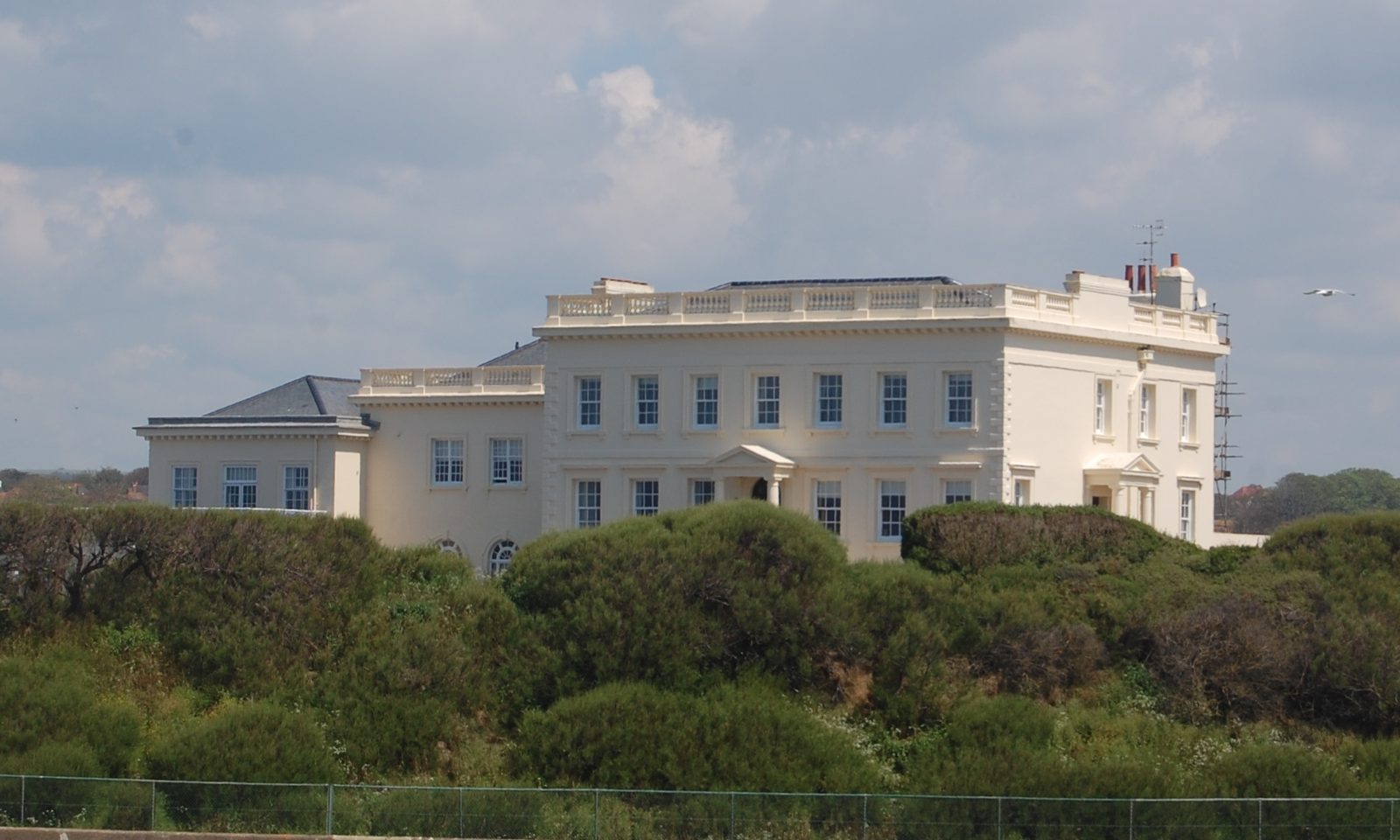
Corsica Hall: The Seaford Mansion Built on Smuggled Wine
The white stucco house above Martello Fields began life near Ringmer around 1740, took its name from a smuggler's Corsican wine, was carted to Seaford in the 1780s, and has since been an MP's seat, a boys' boarding school, a wartime billet, a teacher training college and, today, flats. This is the biography of one building across almost three centuries.
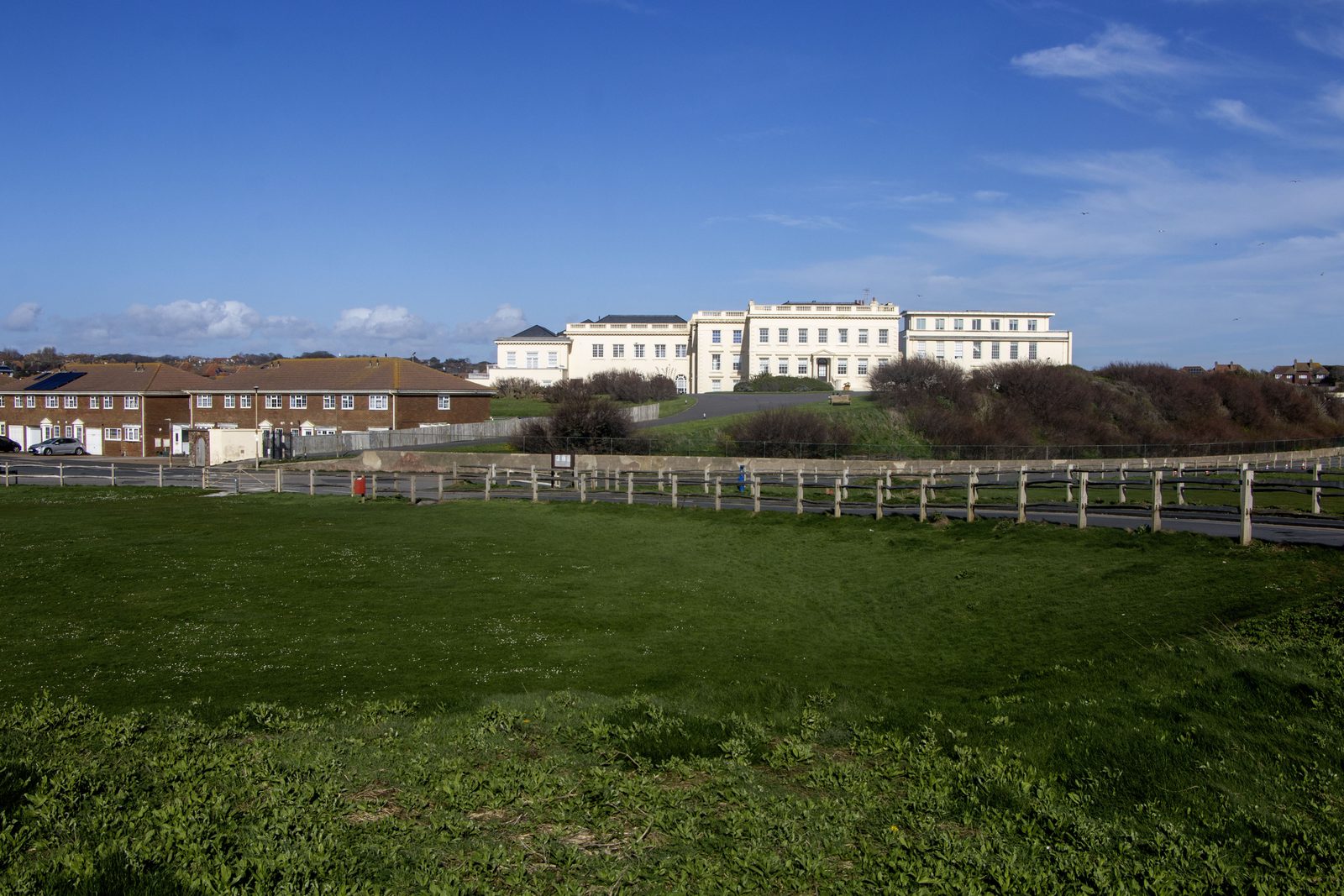
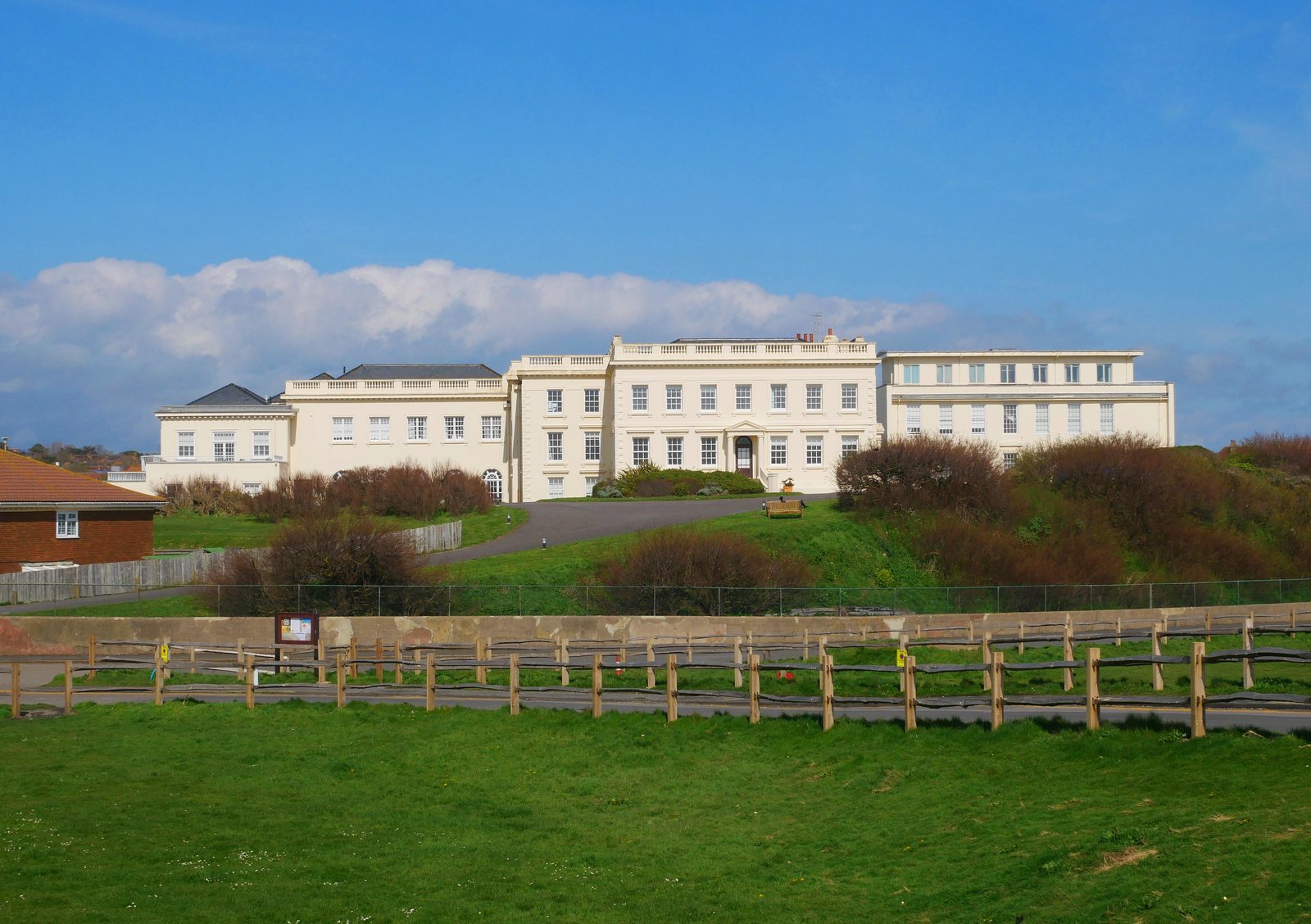
Walk across Martello Fields from the seafront and the building that fills the skyline on the rise to the north is Corsica Hall: two storeys of white stucco, seven windows wide, with a balustraded parapet and Doric porches. It looks like the calmest house in Seaford. Its history is anything but.
A House Called The Lodge
The story starts nowhere near the sea. Around 1740 a stately home called The Lodge was built at Wellingham, near Ringmer, a few miles north-east of Lewes. Its owner was John Whitfield, and by 1760 the house had a new name. According to the Seaford Museum research behind the Walk Seaford heritage trail, Whitfield had been involved in the illegal importation of Corsican wine. When the law caught up with him he is said to have presented King George II with some of his finest bottles, and secured a pardon. Whether or not every detail is true, the name stuck: the house built on the proceeds was Corsica Hall.
It was not a lucky house for its next owners. After Whitfield's death the hall passed to Francis Scott, Lord Napier. In 1772 Napier's son accidentally shot his tutor. The family left, and the hall seems to have stood empty from 1773 until about 1782.
Moved to the Coast
The hall's next owner, Thomas Harben, did something remarkable. Having lived there from around 1782, he had the whole building taken down and moved to Seaford between 1784 and 1786, re-erecting it on the rising ground behind the beach. Carting a mansion over the Downs to a decayed little port, at a time when Seaford had barely begun to think of itself as a resort, must have been the talk of the district.
In 1812 Harben sold it to the Hon. Thomas Bowes, of the family of the Earls of Strathmore, who sold it on in 1823 to a man with political plans for the town.
The MP's House
That man was John Fitzgerald (1775-1852), born John Purcell, the son of a Dublin physician, who had taken his wife's family name. Seaford was then a pocket borough returning two MPs on a tiny electorate, and owning property in the town was the way in. Within a year of buying the hall Fitzgerald had pulled most of the old building down and put up a new house in its place, known as Millburgh (later spelled Millberg). He was elected MP for Seaford in 1826 and sat until the Great Reform Act of 1832 abolished the seat.
What stands today is essentially Fitzgerald's house. Historic England's listing describes it as early 19th century: stuccoed, two storeys and seven windows, with a string course, modillion cornices, a balustraded parapet, long and short quoins, original glazing bars and porches with Doric columns and pediments. It was listed Grade II on 2 March 1950.
His son, John Purcell-Fitzgerald, elder brother of the poet Edward FitzGerald, owned the house in the 1850s and used his wealth to found the Fitzgerald almshouses in Croft Lane (opens in a new tab), which still house older Seaford people today.
Seaford College
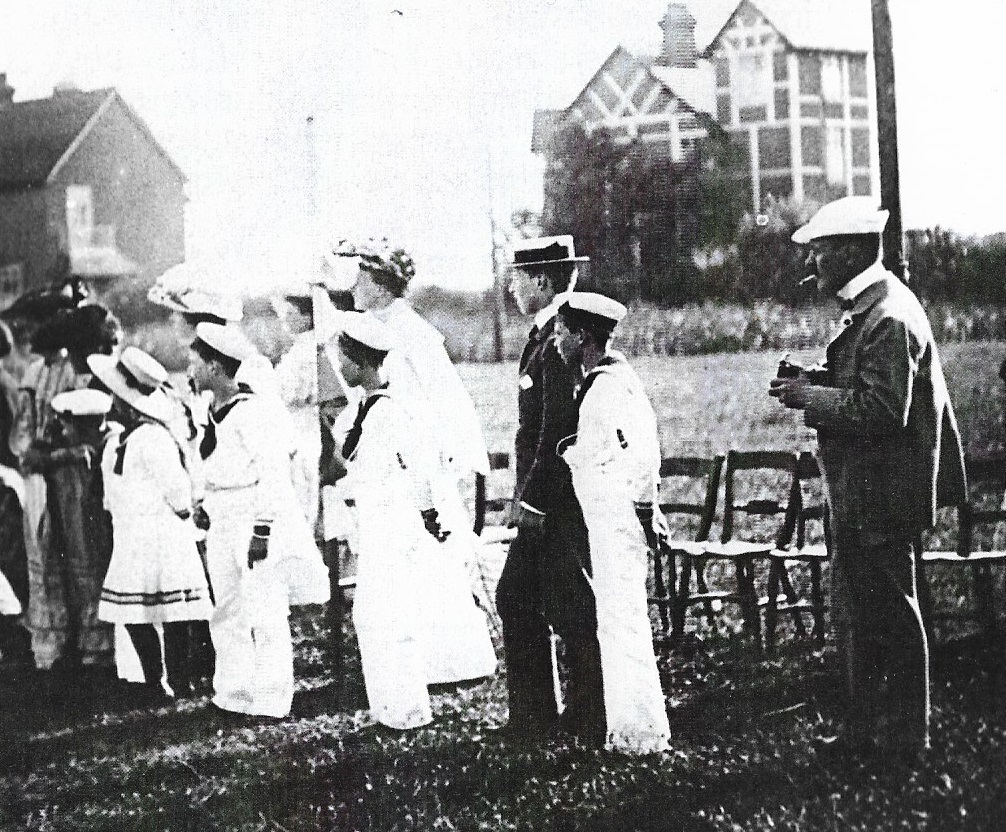
In 1884 Colonel Frederick Savage opened a boys' boarding school in the house and called it Seaford College. Savage, a former junior school head at Hastings, ran it until 1920. He formed a cadet corps in 1891, and the school counted members of the Greek royal family among its patrons: a photograph of the 1909 sports day shows Savage watching alongside them.
Its most famous pupil came between the wars. Anthony Buckeridge (1912-2003) boarded at Seaford College, and his Jennings and Darbishire stories of prep school life drew on his time there; he later said a real boy called Jennings at his old school had been the original.
In 1940 a government order requisitioned every boarding school building in Seaford and gave the schools six weeks to leave. Seaford College went to Worthing, and in 1946 settled at Lavington Park near Petworth, where it remains, still carrying the name of the town it left. Corsica Hall spent the war in military hands, and became a centre of social life for the Canadian troops billeted in the town, with weekly dances to military bands.
Teachers, Then Neighbours
East Sussex County Council bought the building in 1948. On 26 September 1950 the Minister of Education, George Tomlinson, opened it as the Seaford Training College of Housecraft, giving one-year courses for women teachers qualifying in domestic science. From 1963 it ran three-year courses for home economics teachers, and in May 1965 it became Seaford College of Education. In September 1976 it was merged with the Chelsea College of Physical Education in Eastbourne and Eastbourne College of Education to form Eastbourne College of Higher Education, and Corsica Hall later served as an adult education centre.
Around the end of the 2000s the house was renovated and divided into private apartments, which it remains. It is not open to the public, but the best view is free: stand on Martello Fields, with the Martello Tower behind you. The tower's design was copied from a fort at Mortella Point in Corsica, so on that one patch of grass Seaford has two Corsican connections, one military and one, reputedly, smuggled.
Sources
- Walk Seaford, Corsica Hall (opens in a new tab) (text by Clem Collins and Richard Wright, from Seaford Museum research)
- Walk Seaford, John Fitzgerald (opens in a new tab)
- Historic England, Corsica Hall, list entry 1044026 (opens in a new tab)
- Wikipedia, John Fitzgerald (1775-1852) (opens in a new tab))
- Wikipedia, Seaford College (opens in a new tab) and Frederick Savage (schoolmaster) (opens in a new tab))
- Wikipedia, Anthony Buckeridge (opens in a new tab)
- The National Archives, Records of Seaford Training College of Housecraft (opens in a new tab) and Corsica Hall Adult Education Centre, Seaford (opens in a new tab)
- Geograph, Corsica Hall and nearby Corsican connections (opens in a new tab), Andrew Diack
- Top photo: Corsica Hall, College Road, by Hassocks5489 / Wikimedia Commons (opens in a new tab)_(June_2021).JPG) / CC0 (opens in a new tab)