Winifred Mandeville: The Seaford Woman Who Joined the First Women's Army Corps in 1917
In 1917 a 20-year-old munitions worker called Winifred Wilcox joined the brand-new Women's Army Auxiliary Corps and was in France within weeks. She came home engaged to an airman, settled in Seaford for the rest of her life, and was still wearing her original uniform to reunions seventy years later.
For most of the twentieth century a woman lived quietly in Seaford who had been among the first British women ever to serve in the army overseas. Winifred Mandeville went to France in 1917 with, as she later put it, "one dress and two overalls" to last her two and a half years. She came back with a fiance, a set of medals and a store of memories that she wrote down by hand in old age. This is her story.
Dairymaid, Tram Conductor, Munitions Worker
Winifred Mary Wilcox was born at Condover, a village a few miles south of Shrewsbury in Shropshire, the daughter of an agricultural labourer, Edward Wilcox, and his wife Edith. Her father died in 1906 and the family moved to Liverpool, where the 1911 census finds them at 78 Macdonald Road, Wavertree, with her elder brother John, an insurance clerk, as head of the household.
After school Winifred worked on a farm, as a dairymaid and even as a tram conductor. When war came she joined the Liverpool shipping firm Bibby's, which, like many companies, had turned to making munitions.
"Women Urgently Wanted"
By the winter of 1916, after the losses on the Somme, the army was short of men. The answer was the Women's Army Auxiliary Corps (WAAC), set up in 1917 so that women could take over cooking, clerical, store and transport jobs behind the lines and release soldiers for the front. Dr Mona Chalmers Watson was its first Chief Controller, and the botanist Helen Gwynne-Vaughan ran the corps in France.
Winifred heard that women were wanted for the army and decided it was time for a "new experience". According to the Seaford historian Kevin Gordon, who researched her service, she left the munitions bench within days of the recruiting campaign opening. She was 20.
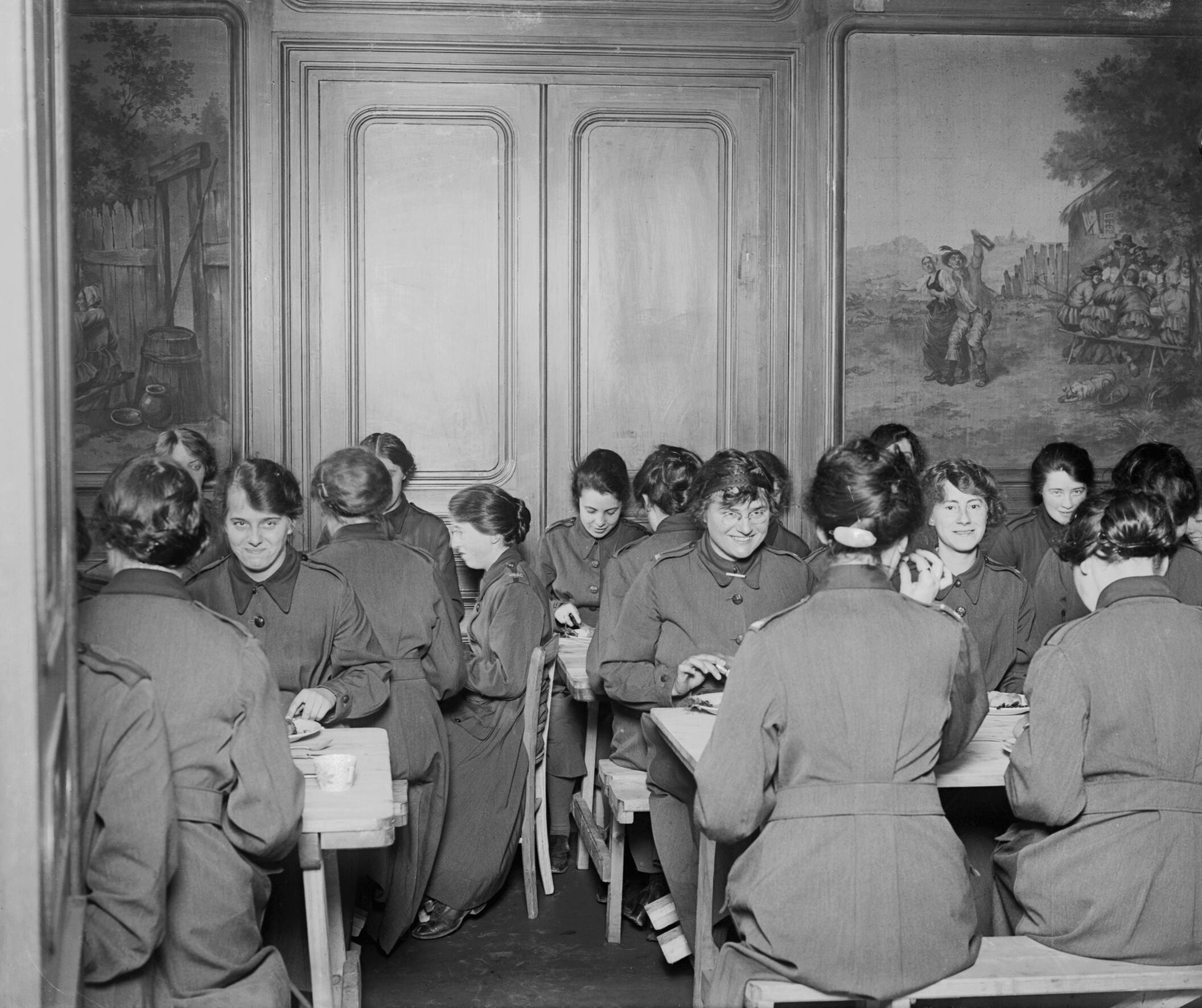
She was issued with a light khaki coat-frock and sent to Hastings for training, where she remembered marching up and down the seafront. Within six weeks she was in France. The very first WAAC draft, 14 cooks and waitresses, had crossed the Channel on 31 March 1917, so Winifred was among the earliest of the more than 50,000 women who would eventually serve.
They were not universally welcome. "I discovered that objection to the employment of women was almost universal," Gwynne-Vaughan wrote. "Men mistrusted the complications which women might entail and disliked the intrusion of this alien element."
Cold Huts and Hammered Biscuits
Winifred was posted to Pont de l'Arche, a few miles south of Rouen. Officially she was a storeswoman, but she ended up doing all sorts of work, often alongside German prisoners of war. Rations were meagre and the women were frequently hungry. She remembered army biscuits so hard, and so riddled with maggots, that they had to be broken up with a hammer. The billets were cold and icy.
At one point she was sent for six weeks to a hospital at Etaples, the vast base camp on the coast near Le Touquet where trainloads of wounded arrived on stretchers from the front. She never forgot the pain and misery she saw there.
In April 1918, after the women had stayed at their posts through the German spring offensive, Queen Mary became the corps' patron and it was renamed Queen Mary's Army Auxiliary Corps. Eighty-one of its members died on service.
A Loaf of Bread and a Bottle of Rum
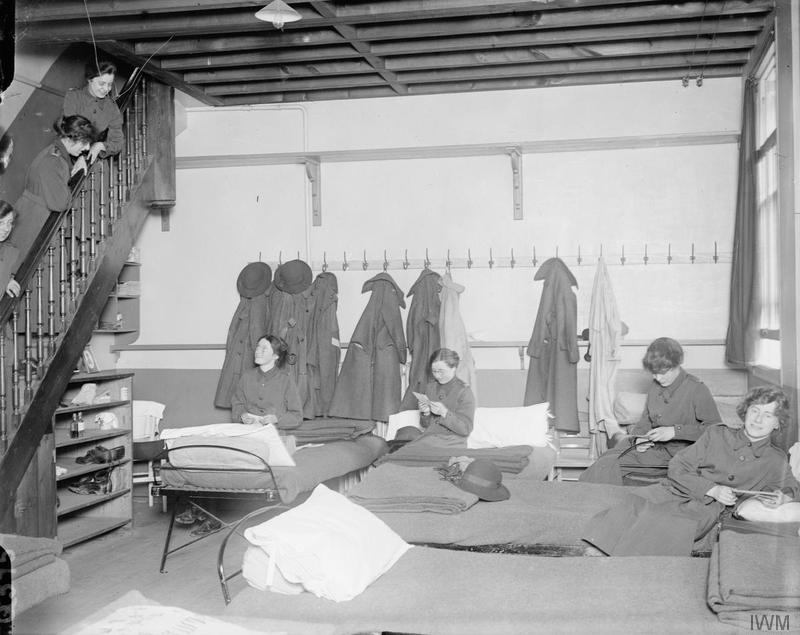
On 7 October 1918 Winifred transferred to the newly formed Women's Royal Air Force. She stayed at Pont de l'Arche, now as storekeeper at an engine repair shop, handing out heavy spare parts for four different types of aircraft engine. She shared a hut with 19 other women, beds down one side and trestle tables down the other. The day began at 5.30 with a mug of tea, then a march to work.
The posting had one great consolation. Arthur Mandeville, a Brighton man who had joined the Royal Flying Corps as an air mechanic in August 1914, was the colonel's driver at the same camp. When they first met Winifred was carrying a loaf of bread, and Arthur offered to swap it for a bottle of rum. Three weeks later they met again. On 11 November 1918, Armistice Day, they got engaged. When the news of the Armistice was announced, Winifred recalled, she, her colleagues and the German prisoners all stood to attention and wept.
Home to Mercread Road
The couple did not get back to England until 1919. They married at Steyning the following year and moved to 1 Mercread Road, Seaford, where Arthur found work with Southdown buses. They had three children and never left the town.
Arthur died in 1942. Winifred carried on serving, as a welfare officer with the Civil Defence Corps and as a member of the Seaford branch of the Royal British Legion. She went to reunions of Queen Mary's Army Auxiliary Corps, often in the uniform she had been issued in 1917.
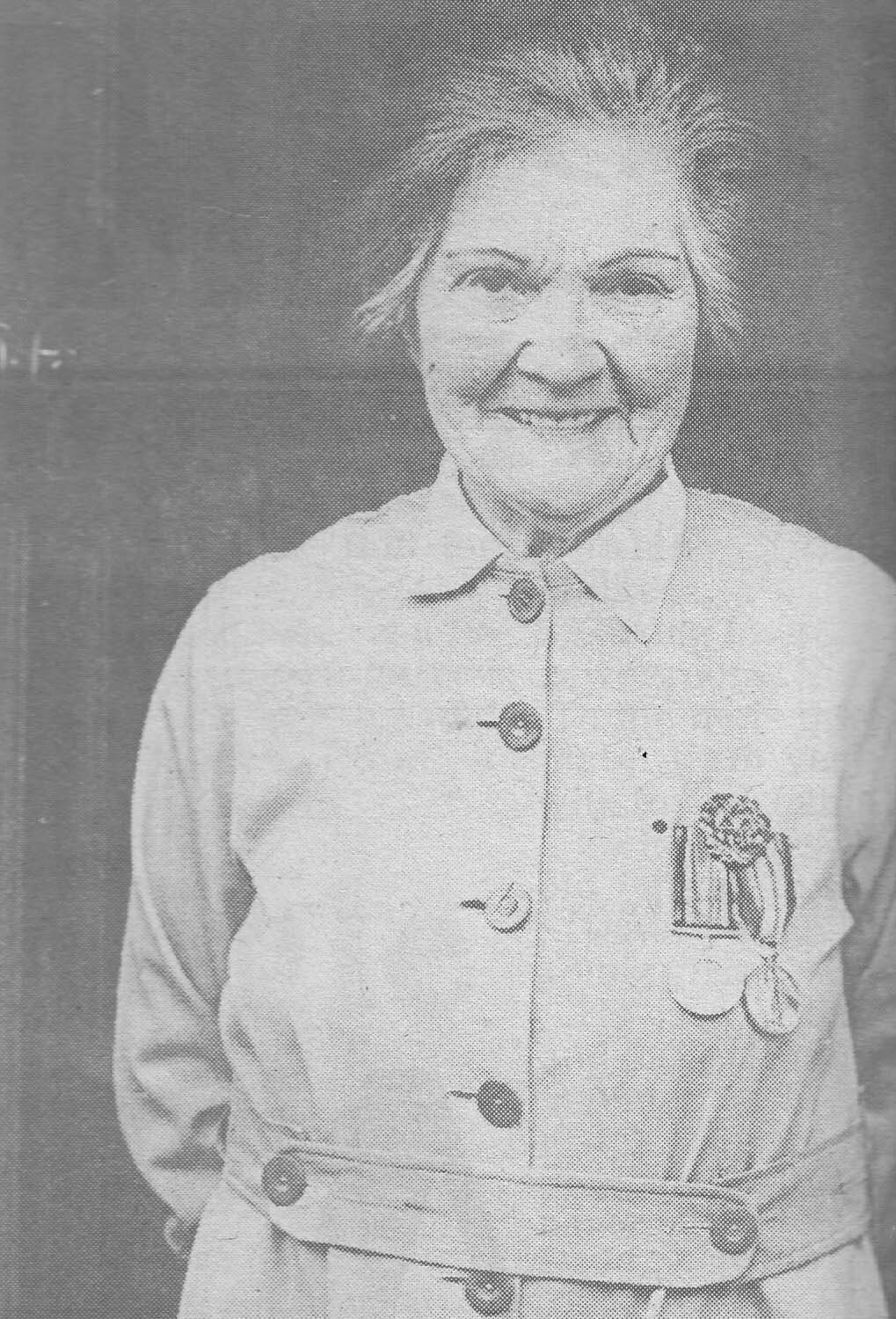
In later life she wrote her memories out by hand, and a photograph from 1988 shows her, smiling, in that same khaki dress with her medals on her chest. She died in Seaford on 12 September 1991.
Where to Find Her Today
Winifred's grandchildren later gave her uniform to Seaford Museum, which is housed in the Martello Tower on the Esplanade. It is worth asking after on a visit: a plain khaki dress that went to France in 1917, came home to Seaford, and was still being worn with pride seventy years on.
Sources
- Winifred's Service in the Great War, Kevin Gordon, Sussex History (2016)
- Queen Mary's Army Auxiliary Corps, National Army Museum
- Queen Mary's Army Auxiliary Corps, Wikipedia
- Seaford Museum and Heritage Society
- Seaford Times (seafordtimes.com), "Mrs Winifred Mandeville: Women's Army Corps Memoirs", recovered archive copy