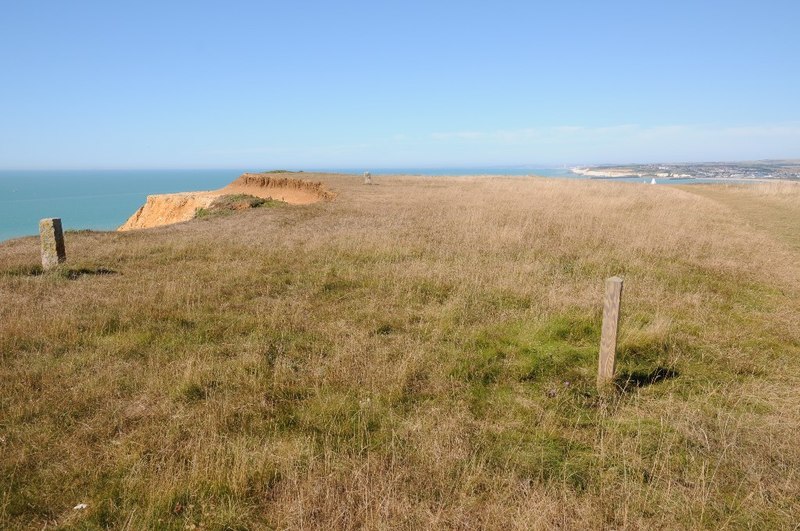
The Wildflowers of Seaford Head — A Summer Walker's Field Guide
Chalk grassland is the most crowded plant habitat in Britain, and Seaford Head has one of the best stretches of it in East Sussex. Here is what flowers when, from the green-winged orchids beside the golf course fairways in May to the rare moon carrot on the cliff edge above Hope Gap in September, and where to stand to see each one.
Grassland That Behaves Like a Rainforest
Chalk downland has been described as "the European equivalent of a tropical rainforest", and the comparison is about density rather than scale. In the richest downland turf a botanist can record as many as 40 flowering plants in a single square metre, every one of them adapted to thin, dry, nutrient-poor soil sitting straight on top of chalk. Seaford Head is one of the easiest places in East Sussex to watch that happen at boot level.
The reserve is a Local Nature Reserve of roughly 150 hectares, of which Sussex Wildlife Trust manages 83, and it forms part of the Seaford Head to Beachy Head Site of Special Scientific Interest. Most walkers start either from the South Hill Barn car park at the top of Chyngton Way (postcode BN25 4JQ, grid reference TV504980) or from Splash Point, climbing the seafront path past the golf course. Either way you are standing in flowering grassland within ten minutes of leaving the car.
June: Orchids Beside the Fairways
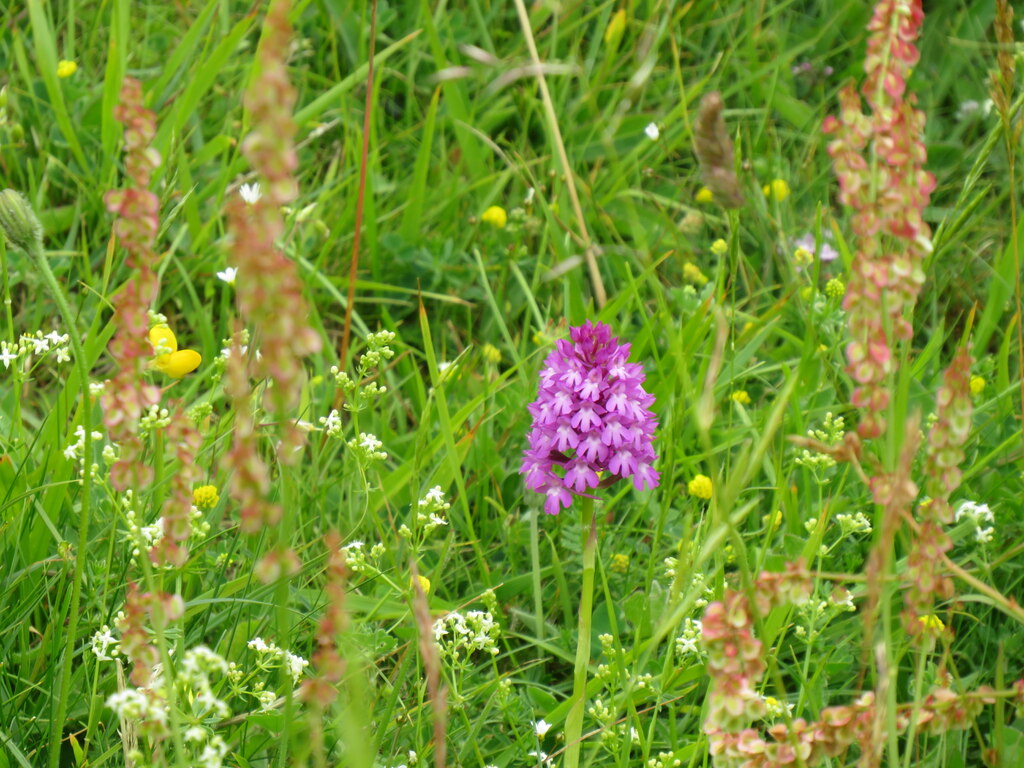
The orchid season opens earlier than most people expect. Green-winged orchids appear in May inside the golf course itself, in the rough beside the fairways, which is why Sussex Wildlife Trust works with the greenkeeper on a mowing regime timed around them. By June the pyramidal orchid (*Anacamptis pyramidalis*) takes over: a dense cone of magenta flowers on a stem 20 to 30cm tall, unmistakable once you have seen one. It shares the short turf with bee orchids and common spotted orchids.
Around the orchids, from June onward, come the workhorse chalk species: kidney vetch (yellow and cushiony, nationally the sole food plant of the small blue butterfly), lady's bedstraw, clustered bellflower, common restharrow and greater knapweed. Selfheal, also called heal-all, flowers from June right through to September. It is a low, square-stemmed member of the mint family with purple flower spikes, easy to walk straight past and worth kneeling for.
July: The Pride of Sussex
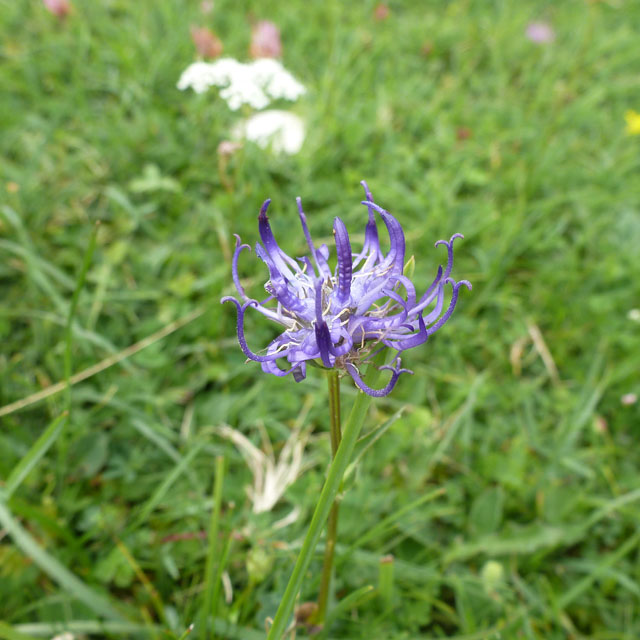
July belongs to the round-headed rampion, which Plantlife adopted as the county flower of Sussex in 2002 and which almost everyone here calls the Pride of Sussex. It reaches 20 to 50cm and produces a tight, deep violet-blue head of curved, horn-like florets that looks more alpine than English. It grows almost exclusively on South Downs chalk grassland, and Cradle Valley, the dry valley reached from the High and Over car park on the Alfriston road just north of the Head, is a dependable place to find it.
A July walk through Cradle Valley will also turn up viper's bugloss, yellow-wort, field scabious, dropwort (*Filipendula vulgaris*), squinancywort, agrimony and bladder campion, alongside common fragrant orchid and the scarce burnt orchid. The list reads like an inventory of everything chalk grassland is supposed to have and, across most of lowland England, no longer does.
August: Centaury, Gentian and the Late Shift
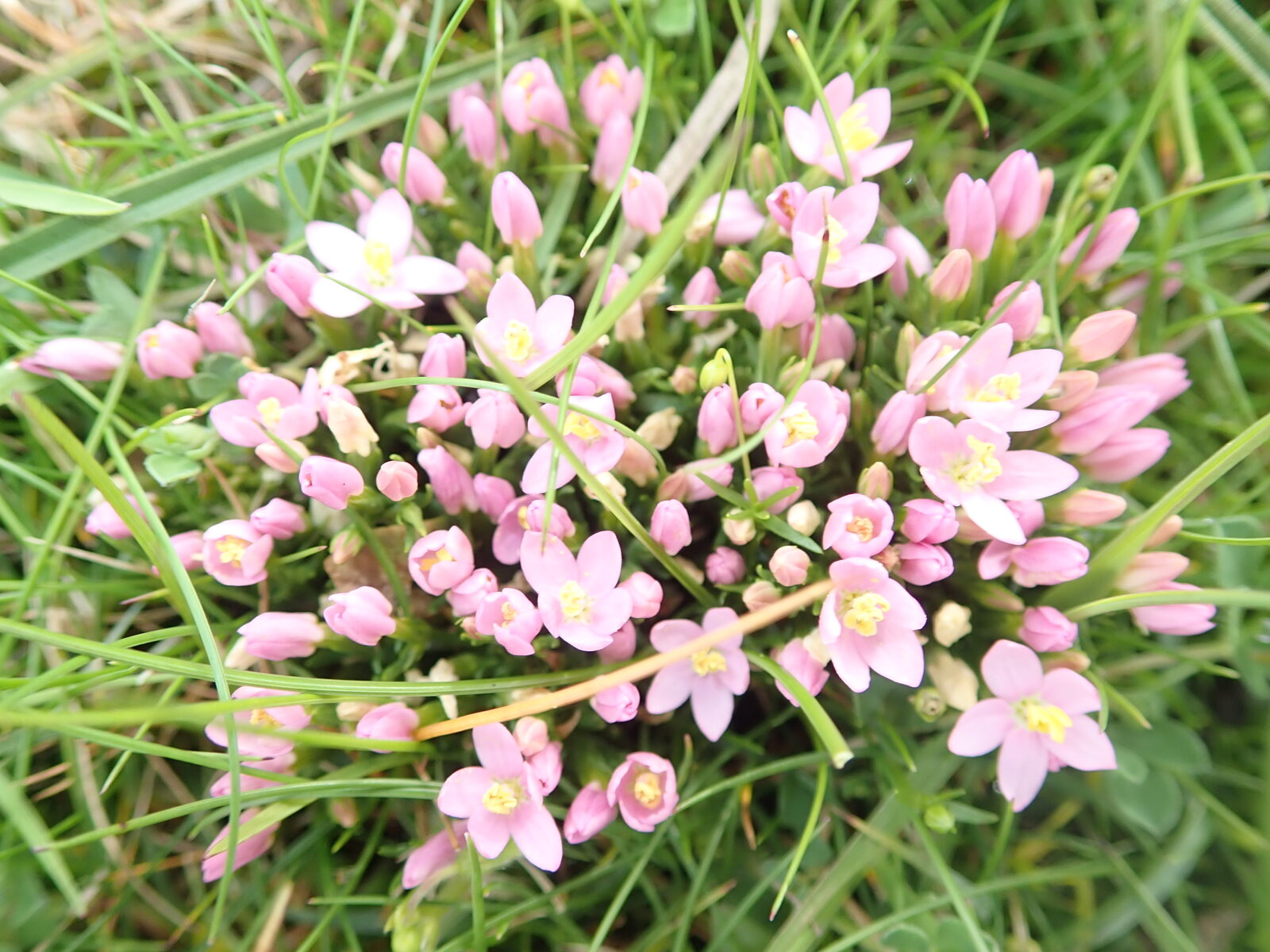
August is when the grass goes brown and the flowers get better. Common centaury, a small pink relative of the gentians, forms flat sprays of five-petalled flowers a few centimetres across. It was a staple of the old herbals, valued for its bitterness as a digestive tonic, and it turns up all over the Head wherever the turf is thin.
Late August brings autumn gentian, ploughman's spikenard, weld and common toadflax in the sheltered ground at Hope Bottom, and squinancywort in the close-cropped grass by the golf course. Common mallow, with big pink flowers and round lobed leaves, grows along the path towards the coastguard cottages above Cuckmere Haven. The chalkhill blues on the wing through July and August depend on horseshoe vetch, which grows here too. And the last orchid of the year, autumn lady's tresses, appears in August and September as a tiny white spiral barely 10cm high in the shortest turf: the hardest one to find and the most satisfying.
September: Moon Carrot on the Cliff Edge
The reserve's real botanical prize flowers when nearly everything else has finished. Moon carrot (*Seseli libanotis*) is a rare umbellifer classed as Near Threatened in Britain, its populations confined to the chalk of Cambridgeshire, the Chilterns and the South Downs, all of them inside Sites of Special Scientific Interest. On Seaford Head it grows on the slopes around Hope Gap. In exposed clifftop positions it can be as short as 15cm; sheltered plants reach 60cm. The flower head is domed rather than flat, more cauliflower than landing pad, and pale enough to justify the name.
In August 2021 volunteers from the Seaford Natural History Society, working with Sussex Wildlife Trust, surveyed the population here and counted it in the thousands. Wild carrot does not grow in that stretch, which made the counting a good deal easier.
Looking After It
All of this exists because of grazing. Without it, scrub and coarse grasses take over and the small chalk specialists are shaded out within a few years, which is why Sussex Wildlife Trust has introduced sheep grazing, brings cattle in at certain times of year, and clears scrub to vary the age and structure of the vegetation.
Three things to remember on a summer walk:
- Keep dogs on a lead when livestock are grazing. The sheep are doing the conservation work.
- Stay well back from the cliff edge. The moon carrot surveyors keep 10 metres back as a rule, and it is a sensible one: the chalk here undercuts and falls without warning.
- Leave the flowers where they are. Under the Wildlife and Countryside Act 1981 it is an offence to uproot any wild plant without the landowner's permission, and several of the species above have very few places left to go.
Best months, in short: June for orchids, July for rampion, late August and September for gentian, lady's tresses and moon carrot. Take a hand lens and give yourself twice as long as you think you need.
Sources
- Seaford Head Nature Reserve, reserve profile (opens in a new tab) and visitor information (opens in a new tab), Sussex Wildlife Trust
- Late August flowers in Seaford Head Nature Reserve (opens in a new tab), Photographing Wildflowers
- Flora of Cradle Valley Seaford in July (opens in a new tab), Photographing Wildflowers
- Counting Moon Carrot on Seaford Head in August (opens in a new tab), Photographing Wildflowers
- Pride of Sussex (opens in a new tab), Sussex Wildlife Trust
- Seseli libanotis (opens in a new tab), Botanical Society of Britain and Ireland
- Seaford Head (opens in a new tab), Wikipedia
- Wild Blooming Seaford 2024, I Love Seaford (archived in the Discover Seaford local archive)
- Hero image: On Seaford Head by Philip Halling / Geograph (opens in a new tab) / CC BY-SA 2.0 (opens in a new tab)