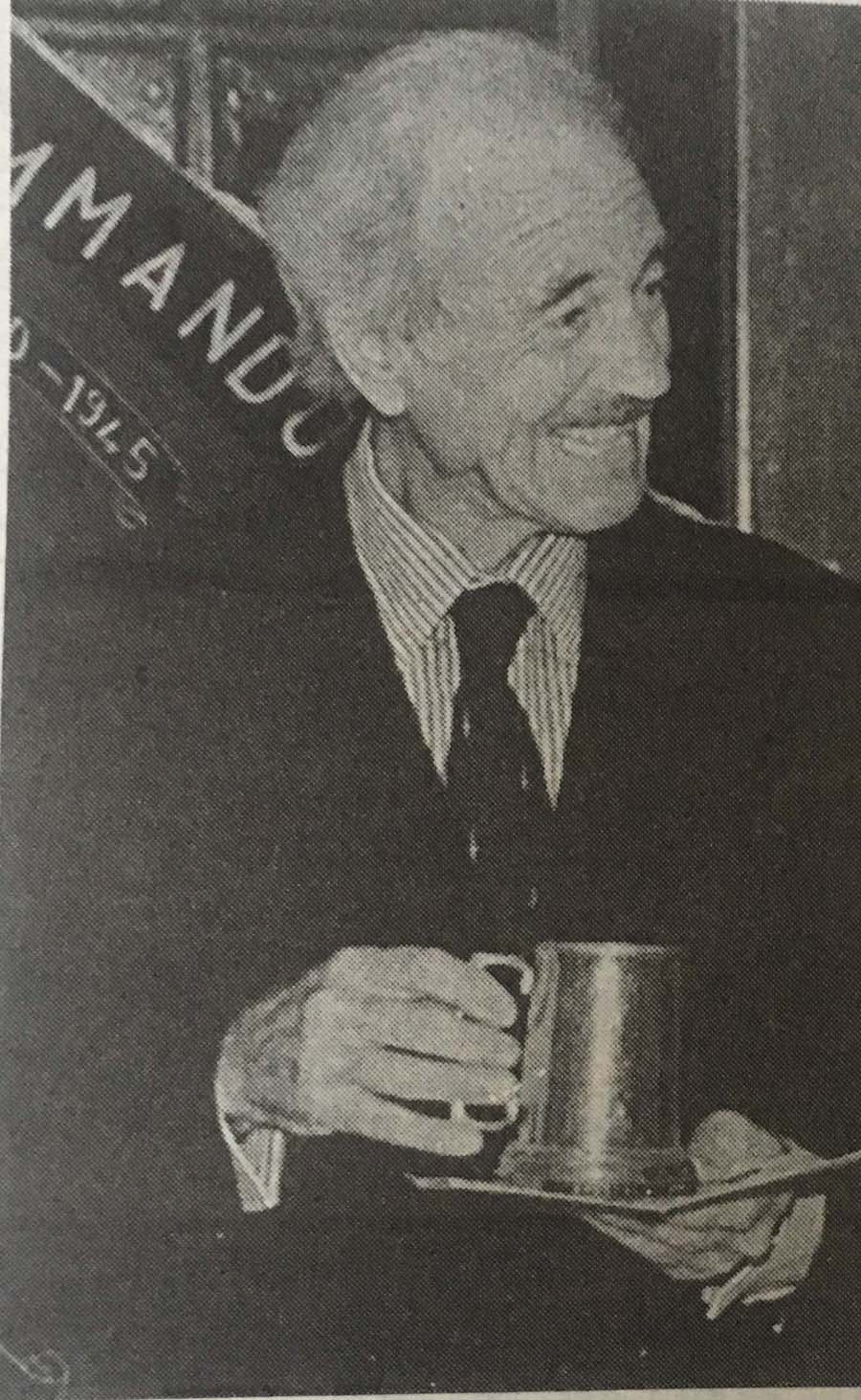
Major Leslie Callf MC and Bar — Seaford's Commando Hero Turned Nurseryman
Born in Seaford in 1915, Leslie Callf led 5 Troop of No. 9 Commando through the Garigliano raids, Anzio and the terrible fighting on Monte Ornito, winning the Military Cross twice. Then he came home to run Rosedene Nurseries, and returned to Italy every year to lay a wreath at the cairn he helped build for his fallen comrades.
A Seaford Boy Goes to War
Leslie Stuart Callf was born in Seaford on 14 December 1915. Like so many of his generation, his twenties were cut in half by the Second World War: he was commissioned as a lieutenant in the Queen's Own Royal West Kent Regiment on 4 July 1940, in the anxious weeks after Dunkirk when a German landing on the Sussex coast seemed a real possibility.
He did not stay in a conventional infantry battalion for long. When the call went out for volunteers for a new kind of raiding force, the Commandos, Callf put himself forward and was attached to No. 9 Commando, a unit that would go on to fight as part of 2 Special Service Brigade.
To Italy with No. 9 Commando
No. 9 Commando sailed from Liverpool on 11 September 1943 under Lieutenant Colonel R. J. F. Todd: 27 officers and 427 other ranks bound for the Mediterranean. They reached Algiers on 27 September and landed at Taranto in southern Italy on 6 November 1943.
Their first major action came on 29 December 1943 with Operation Partridge, an amphibious raid across the mouth of the River Garigliano, behind the German lines. It nearly miscarried before it began: the Navy put the Commando ashore 95 minutes late and 1,000 yards from the correct beach. The raiders pressed on regardless, fought through their objectives and withdrew, at a cost of seven men killed and 21 wounded. It set the tone for the unit's whole Italian campaign: audacious plans, unforgiving terrain, mounting losses.
Anzio and the Mountain
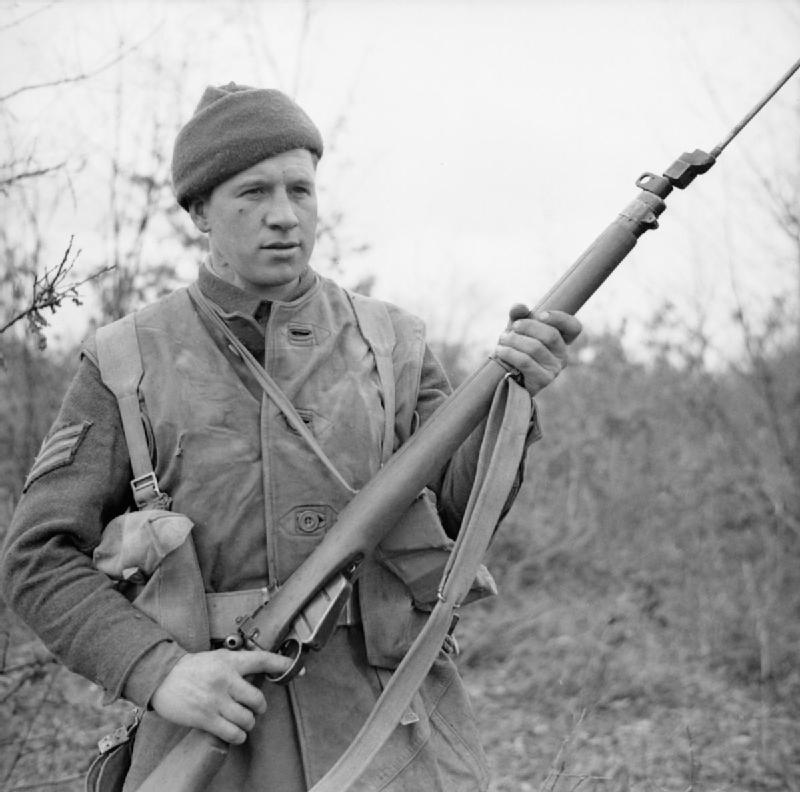
On 20 January 1944 No. 9 Commando landed at Anzio as part of Operation Shingle, the Allied attempt to outflank the Gustav Line. Within five days the unit was withdrawn and thrown into the mountains north of the Garigliano, where alongside 43 Commando it was ordered to take Monte Ornito.
The fighting on Ornito and neighbouring Monte Faito in early February 1944 was among the most brutal the Commandos experienced anywhere in the war. Attacking uphill through rock and freezing weather against dug-in defenders, the unit was cut to pieces: on 3 February 1944 more than half its fighting strength became casualties. Callf, then a captain, commanded 5 Troop through it all.
The Longest Twenty-Four Hours
The Commando returned to the Anzio beachhead, and on 3 March 1944 attacked an enemy-held wadi in an action the unit remembered afterwards as its "longest 24 hours": close-quarter fighting, grenades thrown at a few yards' range, and repeated counter-attacks through the night. Callf later wrote his own short account of that day, one of the documents now preserved among his private papers at the Imperial War Museum.
His leadership through that Italian winter did not go unrecognised. In March 1944 he was awarded the Military Cross "in recognition of gallant and distinguished service in Italy", and a Bar to the Military Cross followed for his gallantry as commander of 5 Troop between November 1943 and March 1944. Later that year, on 9 August 1944, 5 Troop carried out Operation Gradient, a raid on the Adriatic islands of Lussin and Cherso. Callf finished the war with the rank of major.
From Grenades to Greenhouses
And then, like thousands of others, he simply came home. Callf returned to Seaford and took up about the most peaceful trade imaginable: he ran Rosedene Nurseries, growing plants for the gardens of the town where he was born. When the Seaford Times profiled him in 1988, its readers knew him as the nurseryman; the Commando Association knew him as one of its most distinguished members.
That association became the centre of his later life. He was appointed Vice President of the Commando Association in September 1984 and its President on 13 June 1986, an honour that placed the boy from Seaford at the head of the national body representing every Commando veteran in Britain.
The Cairn on Monte Ornito
In September 1985 Callf went back to Italy with a small party of fellow No. 9 Commando veterans. On the old battlefield at Monte Ornito and Monte Faito, he and three others gathered stones and built a large cairn as a permanent memorial to the men of the unit who died there in February 1944. There was no committee, no grant, no unveiling by a visiting dignitary: just old soldiers building a monument with their own hands on the mountain where their friends fell.
For the rest of his life he went back every year to lay a wreath at it. In September 1988, when the Seaford Times caught up with him, the 72-year-old was planning that year's pilgrimage. Leslie Callf died on 4 December 1994, ten days short of his 79th birthday, at home in Seaford. The cairn still stands above the Garigliano, and his papers rest in the Imperial War Museum: a quiet Seaford nurseryman remembered in the national collection as Major L. S. Callf MC and Bar.
Sources
- CALLF, Leslie Stuart (Commando Veterans Archive)
- No. 9 Commando Overseas (Commando Veterans Archive)
- Private Papers of Major L S Callf MC* (Imperial War Museums)
- Seaford Times, September 1988 profile of Leslie Callf (recovered via the Wayback Machine, Discover Seaford archive)
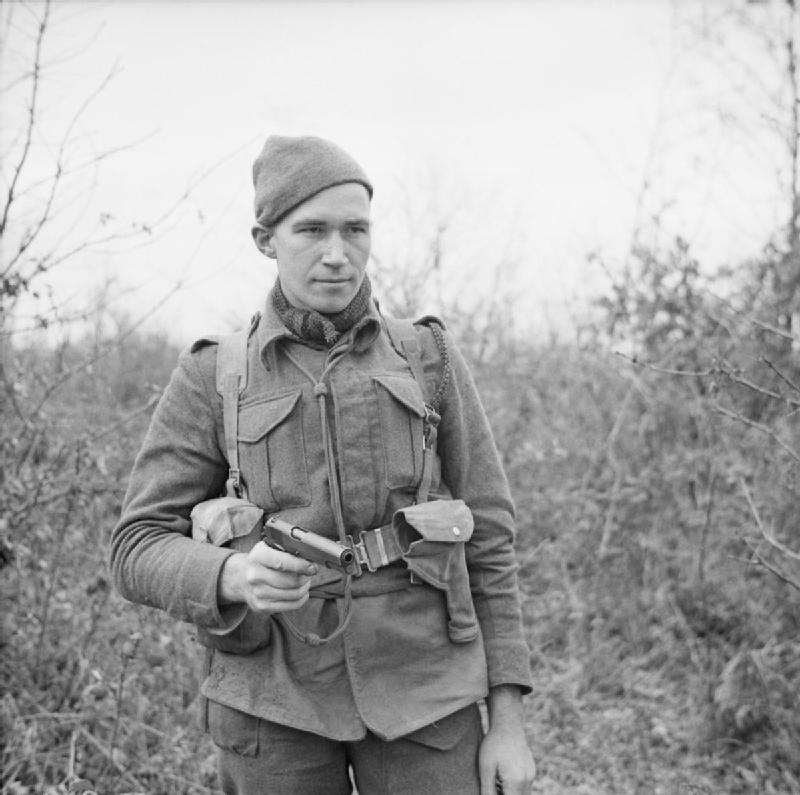
- IWM photographs NA 12466 and NA 12472 (Wikimedia Commons), public domain (Crown Copyright expired)