The Lost Shops of Seaford: A Walking-Memory Tour of Post-War Family Firms
Between 1986 and 1988 Seaford said goodbye to a run of family firms that had served the town since the war: G. H. Buckland the furnishers, the Seymours' electrical business, J. T. Wood the newspaper wholesalers, County Hardware and Winser's the newsagents. This short town-centre walk visits the streets where they traded and tells what the Seaford Gazette recorded as each one changed hands or shut its doors.
In the space of about two years in the late 1980s, a generation of Seaford shopkeepers retired. They had arrived in the years after the Second World War, or inherited businesses from parents who had, and for forty years they sold the town its sofas, its light fittings, its screws and its morning papers. The Seaford Gazette marked each departure with a photograph and a few warm paragraphs, and the local history site Seaford Times later gathered those cuttings together under the heading "a decade of retirements".
This is a walk around the streets where those firms traded. The names have gone from the fascias, so it is a walk for remembering.
How to Walk It
Start at Seaford railway station and finish at Seaford Museum in the Martello Tower on the Esplanade. The route is level, on pavements throughout, and roughly a mile and a half. Allow an hour.
Stop 1: Church Street and the Seymours (1955)
Church Street begins at its junction with Clinton Place, a minute from the station, and runs down past a parade of shops towards St Leonard's Church. It has been a trading street for a long time. Tony Elliot, born in Pelham Place in 1925 and interviewed for Seaford Times at the age of 93, remembered that a boyhood friend's father, Mr Baker, "ran the hardware store on the corner of Church Street and Clinton Place".
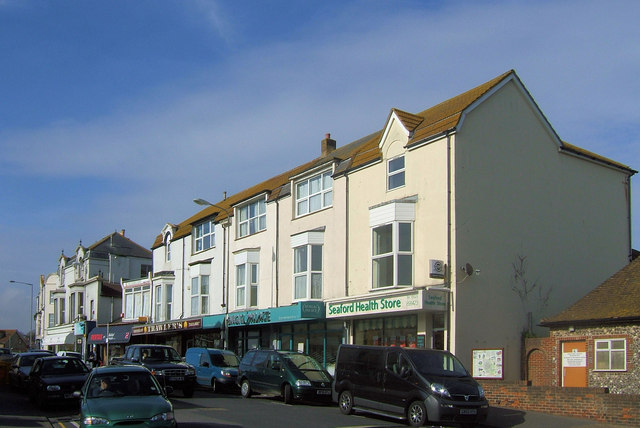
It was here, in 1955, that Colin and Joan Seymour opened their first shop after moving to Seaford from Hampshire. C. H. Seymour Ltd was an electrical contractor, and from what the Gazette called "humble beginnings" it grew to have branches in Lewes and Hailsham and swimming pool servicing contracts all over the United Kingdom.
The Seymours retired in May 1988, but theirs is the one story on this walk that did not end with a closing-down sale. A management buy-out kept the firm trading under its own name. The general manager, Ken Holt, became managing director, and the Seymours' daughter Lynn joined the board. Colin's leaving present was a chrome-plated electrician's tool kit.
Stop 2: Broad Street, High Street and Winser's Papers (1896 to 1988)
Take Place Lane through to Broad Street, the town's main shopping street. Look for the hanging clock outside Cameron's the chemist, then walk down to the High Street.
The High Street was home to the longest-lived firm of all. Frank Thomas Winser and his wife opened a small newsagent's in Brooklyn Road in 1896, moved to East Street, and settled in the High Street in 1914. Their son Frank junior and his wife Gladys took over, followed by grandsons Terry and Barry. After Barry died in November 1987, Terry and his wife Sheila decided that 92 years was enough, and the shop passed to the Dillons chain in 1988.
Terry had worked with newspapers since he was ten. He remembered his grandparents selling papers from a small counter in a front room hung with periodicals, printing the late cricket scores into the stop press column by hand, and the annual 1950s day out to Southsea for the paper boys.
Stop 3: Sutton Road and G. H. Buckland (1945 to 1986)
Head back up Broad Street and turn east along Sutton Road. This was the street of the Empire Cinema, which burned down in 1939 (opens in a new tab). Six years later, in 1945, George and Nina Buckland took a single shop here and began selling furniture.
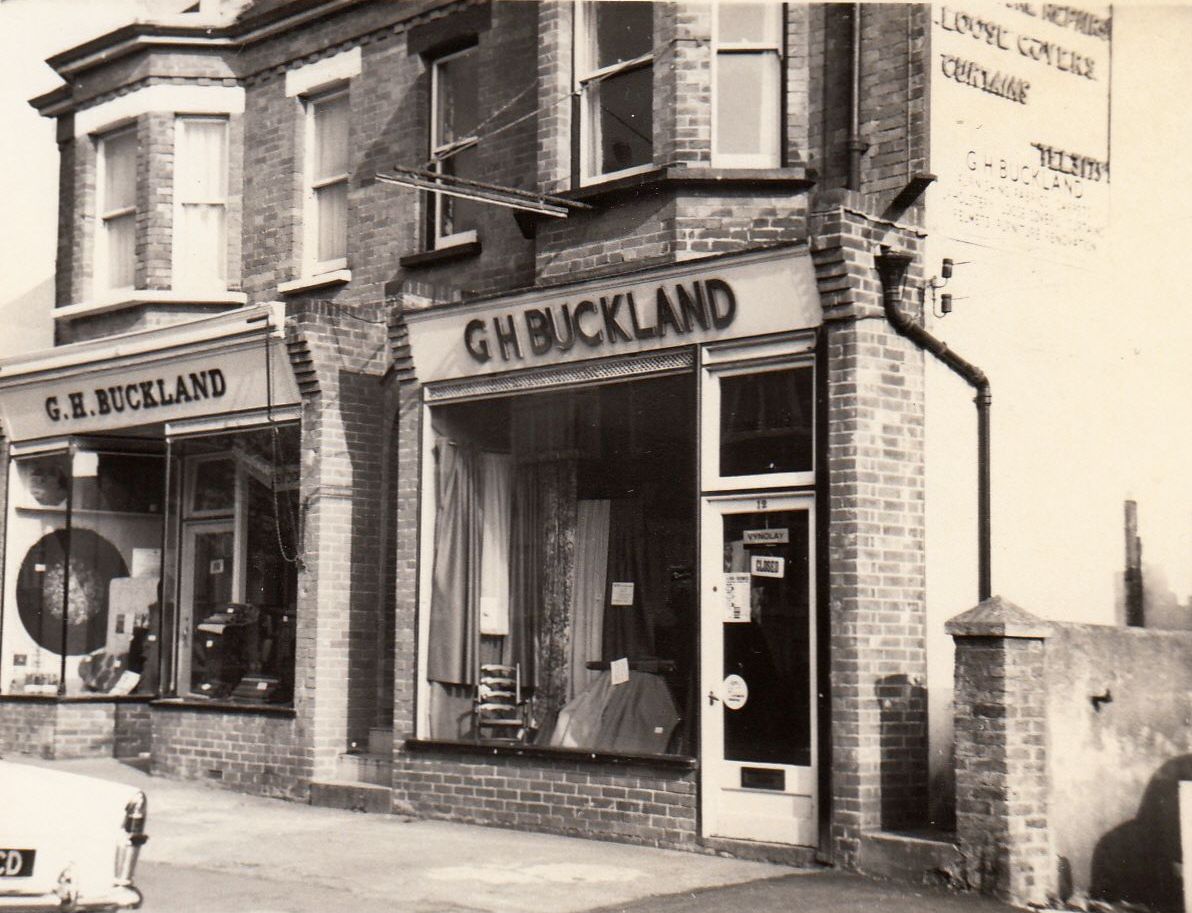
G. H. Buckland became, in the Gazette's words, "the town's only complete home furnishers". The business spread into two more shop premises. There was a showroom of reproduction and modern furniture, beds and bedding, and a workroom staff that tells you how such a firm operated: two people making curtains and loose covers, two fitting carpets and vinyls, and two re-upholstering customers' own chairs. The photograph at the top of this article shows two of the shopfronts, with the services signwritten on the side wall. Orders went to homes in America, Kuwait and Zimbabwe.
Buckland's closed on 31 May 1986 after more than forty years.
Stop 4: Warwick Road and J. T. Wood and Sons (1948 to 1988)
Continue along Sutton Road to the Warwick Road turning. On the way you pass Pigeon House, a tile-hung Victorian house of 1897 built on the site of Pigeon House Farm, a reminder of how recently this was the edge of town.
From Warwick Road, the Wood family supplied Seaford's newsagents with their papers from 1948.
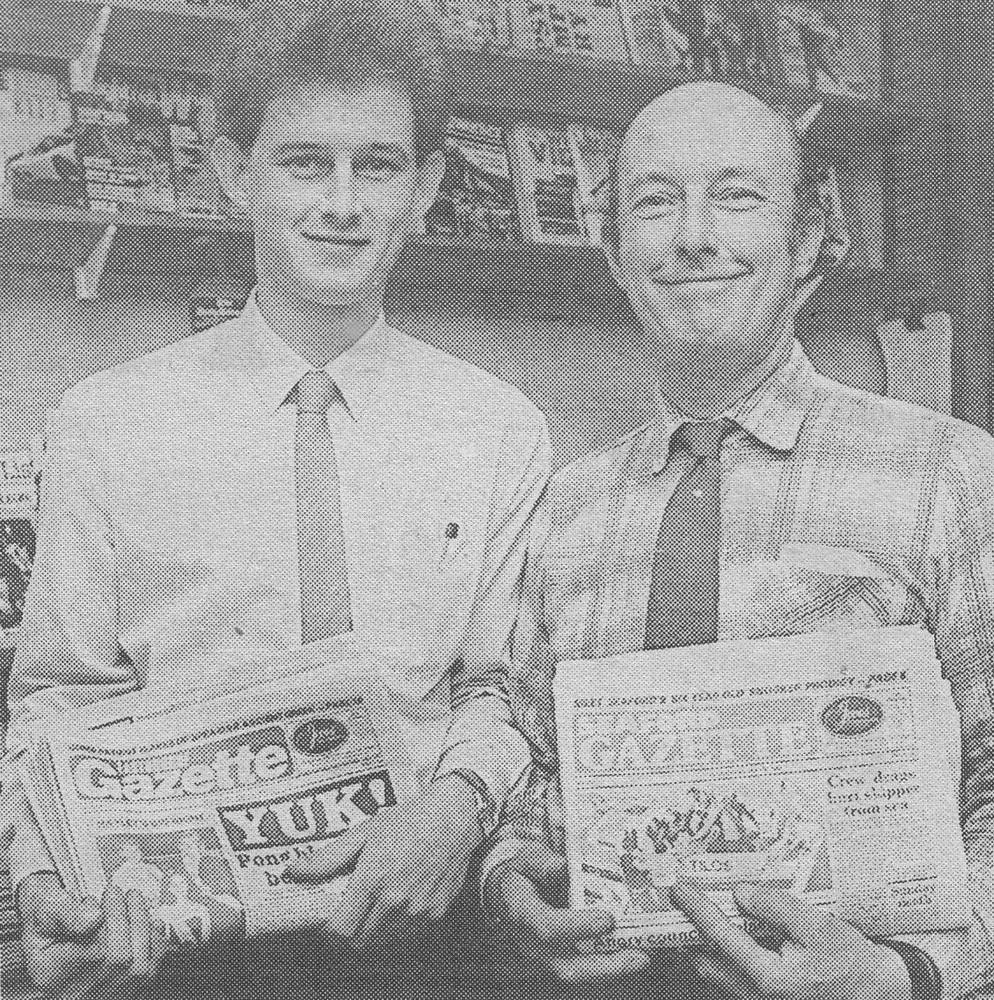
In June 1988 the Gazette reported "a sad day for Seaford". National changes in newspaper distribution were squeezing out small wholesalers across the country, and John Wood, then 49 and living in Downs Road, could not get a franchise under the new system. He took a job with T. Cox and Sons in Eastbourne, and his son Simon went with him.
The One Without an Address: County Hardware
The same week brought news that Andy and Barbara Anderson were selling County Hardware, which they had run since 1964. They had come to Seaford from London, where Andy was a chemical engineer and Barbara a negotiator for an estate agent. Andy kept his plant hire business, Andy Tool Hire, going afterwards.
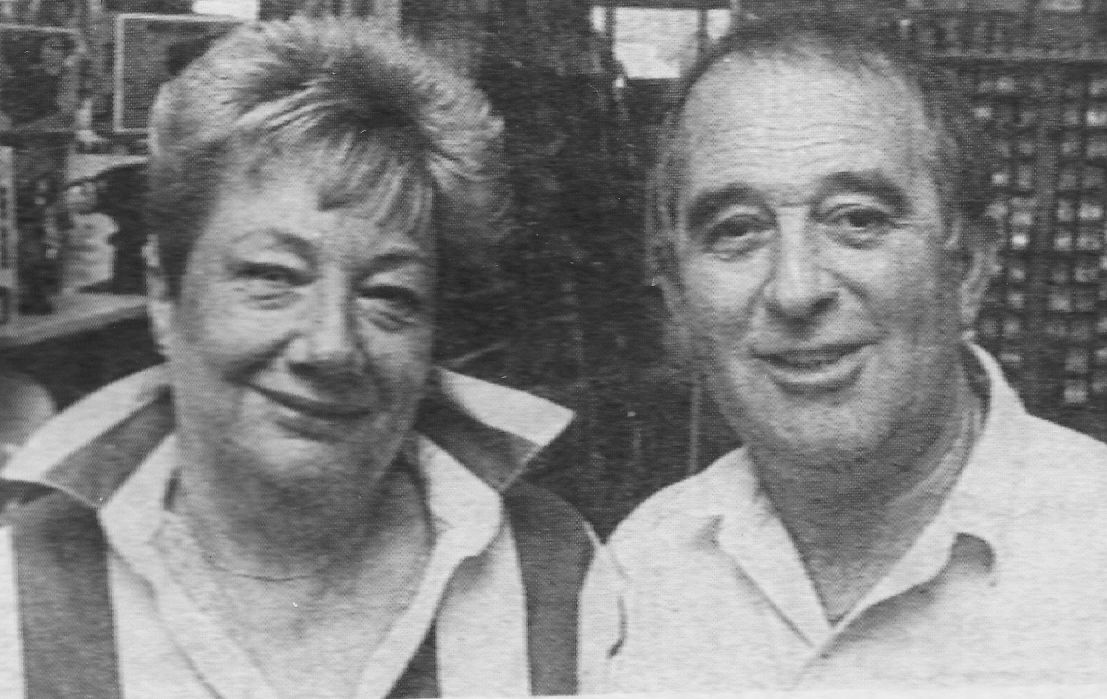
The cutting does not say which street the shop stood in, and we have not been able to confirm it. If you bought your paint and paraffin there, we would like to know.
Finish at the Museum
Walk down to the Esplanade and Martello Tower No. 74. Seaford Museum has rebuilt a parade of old shops inside it, including Cameron's chemist as it looked between about 1920 and 1950, Wynne's hardware shop "with a wide range of tools and memories", a village general store and a cobbler's bench. There is also a collection of Buckland's cameras and projectors.
Cuttings record the dates, but not the smell of the shop or the name of the Saturday boy. If you worked for one of these firms, or have a receipt, a trade card or a staff photograph, tell the museum, and tell us at [email protected].
Sources
- Seaford Times: Seaford History page (opens in a new tab) (archived), reproducing Seaford Gazette reports of 1986 and 1988 and Kevin Gordon's interview with Tony Elliot
- Seaford Museum and Heritage Society: The Tower (opens in a new tab)
- Seaford Heritage Walks: Broad Street (opens in a new tab)
- Geograph: Church Street, Seaford (opens in a new tab) and Pigeon House, Warwick Road (opens in a new tab), both by Kevin Gordon