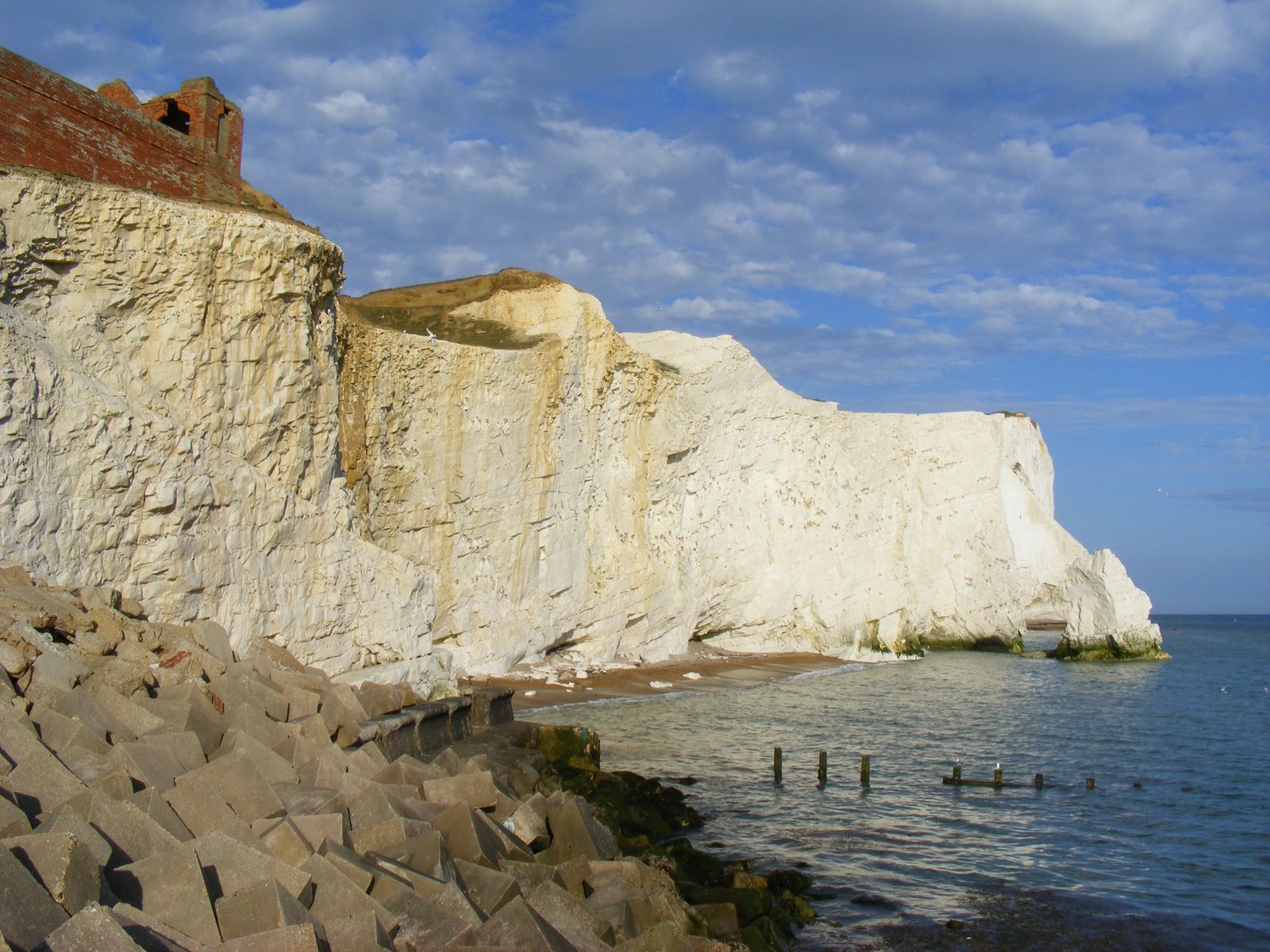
The Kittiwakes of Splash Point: Seaford's Seabird City
Since 1989 kittiwakes have nested on the chalk at Splash Point, the only colony in Sussex and the last in south-east England, watchable from the end of Seaford's promenade. How the colony grew to over 1,000 nests, why a cliff fall and the 2026 heatwave hit it so hard, and how to watch the birds between March and August without disturbing them.
Walk east along the Esplanade until the promenade runs out against the white wall of Seaford Head, and between March and August you will hear the colony before you see it: a high, nasal "kitti-waaake, kitti-waaake" echoing off the chalk. This is Splash Point, home to the only kittiwake colony in Sussex and the last one left in south-east England. Few seabird cities anywhere in Britain can be watched from a bench at the end of a town promenade.
A Gull That Belongs at Sea
The kittiwake (*Rissa tridactyla*) is a small, gentle-looking gull, about 38 to 40cm long, with a grey back, white head, small yellow bill, dark eye and short black legs. Its wingtips are solid black with no white spots, as if, in the RSPB's phrase, they had been "dipped in ink". The name is simply its call written down.
Unlike the herring gulls on the Seaford rooftops, kittiwakes are true ocean birds. They come ashore only to breed, and once the chicks have flown they head out into the Atlantic for the winter. The Sussex Wildlife Trust's Seaford Head leaflet notes that the Splash Point birds may travel as far as North Africa or Greenland before returning.
How the Colony Began
Kittiwakes first bred at Splash Point in 1989, according to the Sussex Wildlife Trust, and the colony grew quickly into one of the busiest on the south-east coast. The Sussex Ornithological Society (SOS) has counted the nests most years since. At its peak in 2016 its surveyors recorded 1,120 nests.
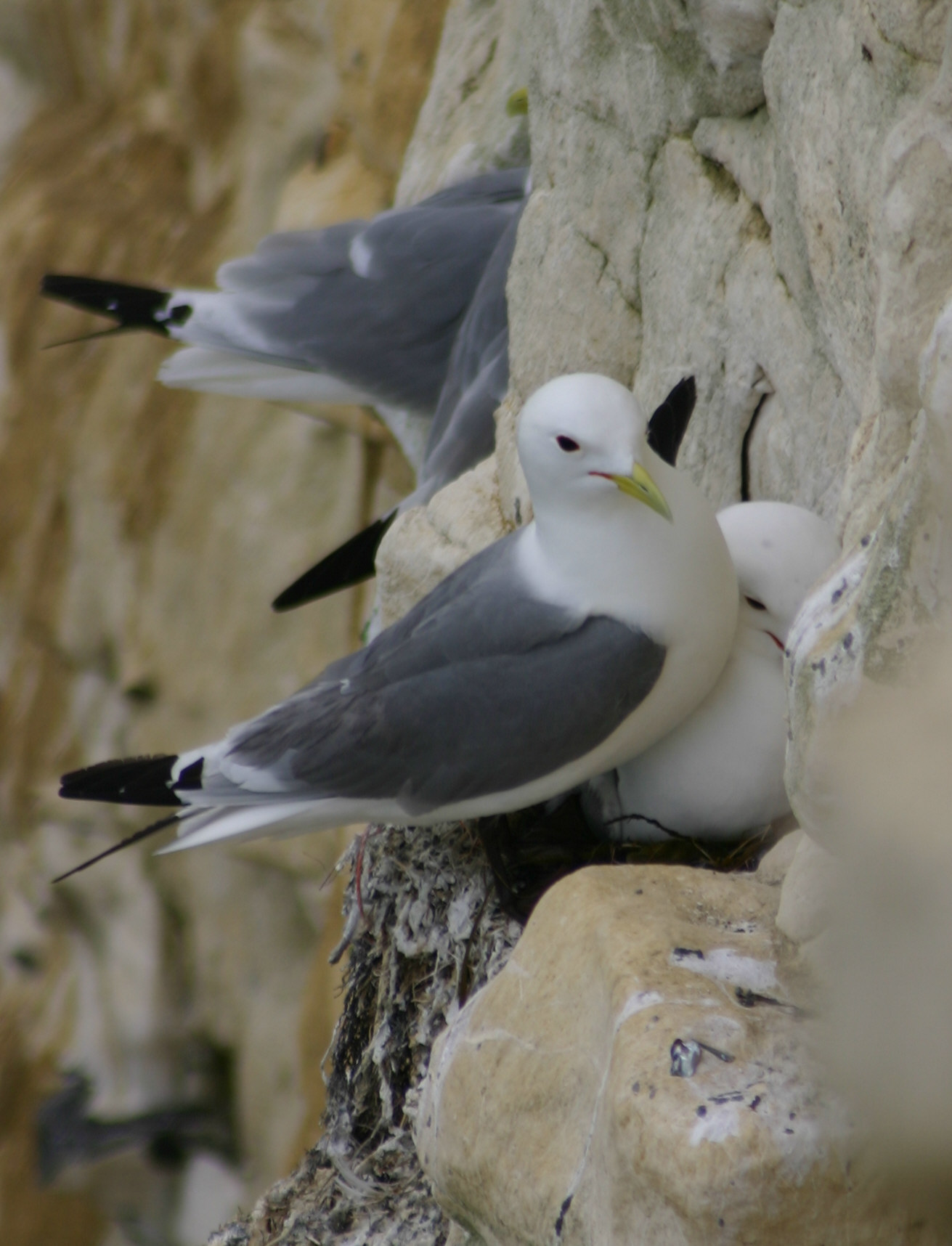
Each pair builds a neat cup of mud, grass and seaweed on a ledge that often looks far too small to hold it, then lays one or two eggs. Chalk is a good material for this: it is soft enough to weather into tiny shelves, and a sheer cliff keeps foxes and other land predators away. The same softness is the colony's weakness, as the last few years have shown.
Hard Years on the Cliff
Since that 2016 peak the colony has shrunk sharply. In 2022 the SOS found 383 apparently occupied nests, the lowest count since 2011. Kittiwakes are on the UK Red List of birds of conservation concern, and the decline at Seaford matches falls at colonies across the country, which the RSPB links to shortages of sandeels, the small fish the parents feed their chicks. Speaking at the SOS annual conference, local researcher David Howey noted that although numbers fell after the Rampion wind farm was built offshore, colonies all over the UK fell at the same time, so the statistics can mislead anyone looking for a single local cause.
Then, in February 2024, a cliff fall at Splash Point brought down a large section of the ledges the birds used. The fulmars that nested alongside them lost their sites too. The kittiwakes came back that spring regardless and many were sitting on eggs by June, but the SOS count fell to 202 nests. In 2025 the colony recovered to 364 nests.
The summer of 2026 was the hardest yet. The birds came through the May heatwave, but the June heatwave was too much. About 200 nests were counted in mid June, and by the official survey on 1 July the ledges were empty. "The south-facing chalk cliff must have been unbearable for them," said Alison Giacomelli of the SOS Scientific Committee. The likeliest explanation is that the eggs failed in the heat, leaving the adults no reason to stay. In the society's words, it is "a colony that has lost an entire breeding year".
When to Go and What to Look For
Kittiwakes are present at Splash Point from roughly March to August. A sensible calendar for a visit:
- March and April: birds return, pair up and display on the ledges, with plenty of noisy greeting calls.
- May and June: nest building and incubation. Look for adults sitting tight on the cups of mud.
- July: fluffy grey chicks peer over the edge of the nests. Young birds have a dark zigzag across their wings.
- August: the youngsters fledge and the colony empties out to sea.
The best viewing is from the end of the promenade and the easternmost groyne at Splash Point, where binoculars give good views of the ledges. In past summers RSPB volunteers have set up telescopes here for passers-by. While you are watching, look out for fulmars, which glide stiff-winged along the cliff face like small albatrosses, and for peregrines and ravens, both of which now nest on Seaford Head.
Watching Without Disturbing
The colony is easy to reach, which makes good manners important:
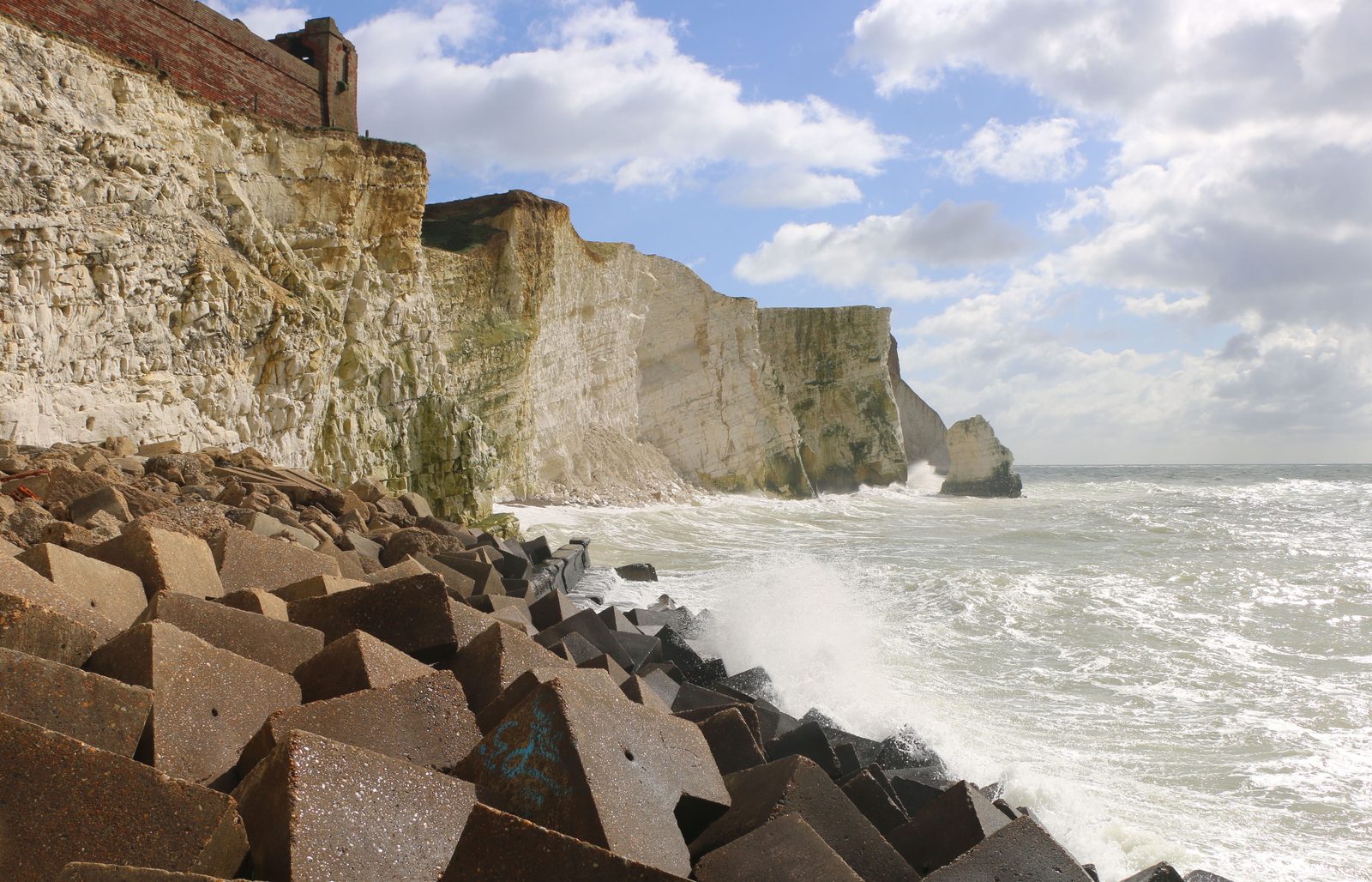
- Stay off the beach below the cliff. The chalk falls without warning (Seaford Head erodes by about 4cm a year on average, and by metres in a stormy winter), and people underneath flush birds off their eggs.
- Keep dogs on leads on the promenade near Splash Point.
- Never fly a drone near the cliff. Seabirds treat drones as predators.
- Keep your voice down and let the birds' own racket be the soundtrack.
If you see someone disturbing nesting birds, Sussex Police treats it as a wildlife crime and can be reached on 101.
Why It Matters
After two broken seasons, nobody knows whether the kittiwakes will return in strength in spring 2027. The SOS will be counting again, and every visitor who watches quietly from the promenade is part of the colony's best chance. If you do go, it is worth sending your sightings to the Sussex Ornithological Society, whose records are how the town knows what is happening on its cliff.
Sources
- Kittiwake Colony Abandons Seaford Site During Summer Heatwave (opens in a new tab), Sussex Ornithological Society, September 2026
- SOS Annual Conference report on the Splash Point kittiwakes (opens in a new tab), Sussex Ornithological Society
- Seaford Head Stroll leaflet (opens in a new tab), Sussex Wildlife Trust
- Concern for Kittiwake colony after cliff fall (opens in a new tab), BirdGuides
- Seaford, 12 June 2024 (opens in a new tab), RSPB Richmond and Twickenham Local Group
- Kittiwake (opens in a new tab), RSPB
- Seaford Head (opens in a new tab), Wikipedia
- Top photo: Cliffs at Splash Point, by Paul Farmer / Geograph (opens in a new tab) / CC BY-SA 2.0 (opens in a new tab)