Catherine Trigwell and a Century of Seaford Scouting
In 1988 Catherine Trigwell of Seaford received the Silver Acorn, one of scouting's highest awards for adult volunteers, and was invited to the annual parade at Windsor Castle. Her award is the way into a longer story: Mr Burroughes' first troop in Steyne Road, the Guides of 1918, an old army hut in Chichester Road, and the town's 2002 fight to save its scout headquarters.
In 1988 the Seaford Gazette carried a short item about a local woman. Mrs Catherine Trigwell had received the Silver Acorn for her service to scouting, and she had been invited to the annual scouts' parade at Windsor Castle. Few volunteers ever receive the award, and by then the movement she served had been part of Seaford life for about seventy years.
The Silver Acorn
The Scout Association created the award in 1932 (for a short time it was called the Silver Medal) to recognise "specially distinguished service". It became one of the St George's Day awards in 1933, and since about 1952 it has been worn on a ribbon round the neck. It is not normally given until a volunteer already holds the Medal of Merit and has served at least five more years, so in practice it marks twenty years or more of work.
The Windsor parade began in 1934, when 750 King's Scouts and their leaders marched past the King and Queen on their way to St George's Chapel. It is still held every year on a Sunday close to St George's Day.
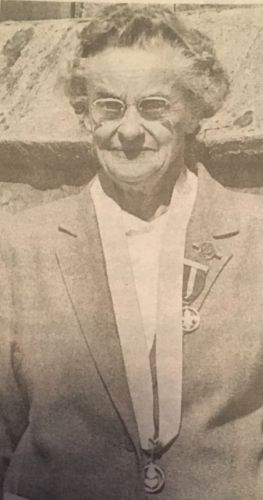
The surviving report does not say which Seaford group she served, or in what role.
Burroughes' Own
Scouting reached Seaford within a few years of Robert Baden-Powell's first experimental camp on Brownsea Island in 1907. A Mr Burroughes, who had read about Baden-Powell's work, founded the 1st Seaford Scouts, and at first the boys met at his house, The Homestead, in Steyne Road. An early photograph shows Mr and Mrs Burroughes with the troop, a handcart and five bicycles, under a flag reading "1st Seaford Troop, Boy Scouts (Burrougheses Own)".
Meetings later moved to a building in Brooklyn Road. Another photograph, probably taken on Bonfire Night 1918, shows Burroughes and his scouts with collecting tins, the flags of the Allies (including the Stars and Stripes) and an effigy of the Kaiser.
Schools, Guides and an army hut
Soon afterwards the 2nd Seaford Scouts were formed at Newlands School. Several more of the town's many private schools, among them Kingsmead and St Peter's, ran troops of their own. By 2007 the Newlands troop was the only school troop left in Seaford.
The girls were not far behind. Mrs A. Martley, who had started Guides in Crawley as early as 1911, helped arrange a meeting at the Downs School for girls on 30 November 1918. A committee was elected there, and a week later two companies opened: the 1st Seaford under Mrs Burke and the 1st Blatchington under Mrs Martley herself. The first Brownie pack followed in 1919, and by 1920 the 1st Seaford Guides had Miss Croft as captain. At one early camp at Firle Place the girls had to skin 19 rabbits sent over by Viscount Gage's gamekeeper.
In 1921 Baden-Powell visited East Sussex, and Seaford's scouts paraded before him in Lewes. That same year they rented a plot of land in Chichester Road and took over an old hut that had been an army transport office at North Camp, the military camp on the edge of town. The Guides shared the site, and joint fundraising allowed the two movements to buy the land. The 1st Seaford Boy Scout Group put its affairs on a formal footing with a Declaration of Trust dated 6 June 1928. The Guides moved elsewhere in 1934. In the 1950s a permanent headquarters was built, and in 1978 it was extended and the old army hut was finally pulled down.
The fight for Chichester Road
The Trigwell name came back into the story at that headquarters. In September 2002 the Seahaven District Scout Council applied to demolish the Chichester Road building and put up three four-bedroom houses. It argued that scouts hardly used the building, that it was run down and that it would cost too much to repair. Councillor John Freeman told Seaford Town Council that up to 300 people a week used the hall, including Scouts, Guides, dance classes and a nursery group. Four Guide groups had already moved to Seaford Baptist Church.
Barry Trigwell, a former Seaford Scout Leader, collected signatures at his shop, Seaford Lighting in Broad Street. "It just started with a few sheets and had soon snowballed around the town in just ten days," he told the Sussex Express. (The reports do not say whether he was related to Catherine.) John Bamblett, leader of the 16th Seaford Scouts, objected too. The petition reached 1,685 names and the town council opposed the plan. Even so, in December 2002 Lewes District Council's planning committee approved it by five votes to three, against the advice of its own planning officers. By then scouts no longer used the building at all; it housed a playgroup and a dance club.
Still going
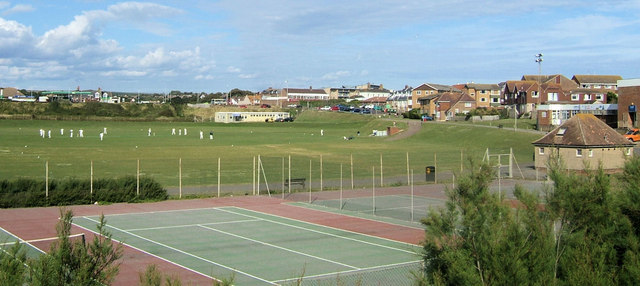
Scouting in Seaford outlived its first hut. In 2007, the movement's centenary year, the town had four scout troops. Its scouts had just been to Kenya, where two of them were invested at Baden-Powell's grave. Today Seaford is part of Seahaven District, which has six Scout Groups and two Explorer Units between Telscombe Cliffs and the Cuckmere valley, with Beavers, Cubs and Scouts for young people aged six to fourteen. One of them, the 6th Seaford (St Leonard's) Scout Group, is a registered charity with its address in North Camp Lane, named after the camp that supplied the town's first scout hut. The photograph at the top of this page, taken in 2008, shows another scout hut beside the cricket pitches on the Salts.
Help us fill the gaps
Much of this story is still missing: which group Catherine Trigwell served and for how long, where the 3rd to the 16th Seaford groups met, and who led them. If you were a Cub, Brownie, Scout or Guide in Seaford, or you have photographs or a group history, please tell Seaford Museum, and tell us at [email protected].
Sources
- Seaford Times (seafordtimes.com), Seaford History page reproducing 1988 Seaford Gazette reports, including Mrs Catherine Trigwell's Silver Acorn (recovered archive copy)
- Kevin Gordon, "When the scouts were 'Burrougheses Own'" (opens in a new tab), Sussex Express, 8 February 2007
- Kevin Gordon, "Off to guide camp and there's 19 rabbits to skin" (opens in a new tab), Sussex Express, 22 March 2007
- "Bid to sell Scouts' HQ upsets leaders" (opens in a new tab), Sussex Express, 12 September 2002
- "Save our Scout HQ" (opens in a new tab), Sussex Express, 27 September 2002
- "Scout HQ can be demolished" (opens in a new tab), Sussex Express, 12 December 2002
- Charity Commission: 1st Seaford Boy Scout Group (305865) (opens in a new tab) and 6th Seaford (St Leonard's) Scout Group (280251) (opens in a new tab)
- Cambridge District Scout Archives, Silver Acorn and Silver Wolf (opens in a new tab)
- The Scout Association, Windsor: history of the event (opens in a new tab)
- Top photo: Salts Recreation Ground, Seaford, by Kevin Gordon / Geograph (opens in a new tab) / CC BY-SA 2.0 (opens in a new tab)