Captain Lewis Crook — Seaford's Sporting Godfather
His name is on the founding records of Seaford Cricket Club, the Seaford Rovers football club and, at one remove, the town's volunteer fire brigade. Captain Lewis Crook was the Victorian who seems to have started everything in Seaford that involved a pitch or a uniform, and yet almost nothing about the man himself is settled, including whether the cricket club really began in 1860 or thirty years later.
The Name That Keeps Turning Up
Dig into the founding paperwork of almost any Victorian institution in Seaford and the same name surfaces. Captain Lewis Crook was president of the town's cricket club. He was president of its first football club. He sits in the orbit of the local volunteer company that, by one surviving account, produced the cricket club, the football club and the fire brigade between them. A description recovered from the now defunct Seaford Times calls him "a man involved in just about everything in Seaford during his time in the town who loved all sport."
Almost nothing else about him is settled. He is a captain in some records and a major in others, which fits a part-time volunteer officer promoted over long service. No portrait of him is known. What survives instead is a trail of institutions, and a genuine disagreement between the sources about when he set them going.
Cricket: 1860, or 1892?
Cricket in Seaford is older than any club. Sussex newspapers of 15 and 16 May 1776 report a match on Blatchington Down between the gentlemen farmers' sons of the east and west sides of the Lewes River, the earliest recorded organised sport in the town.
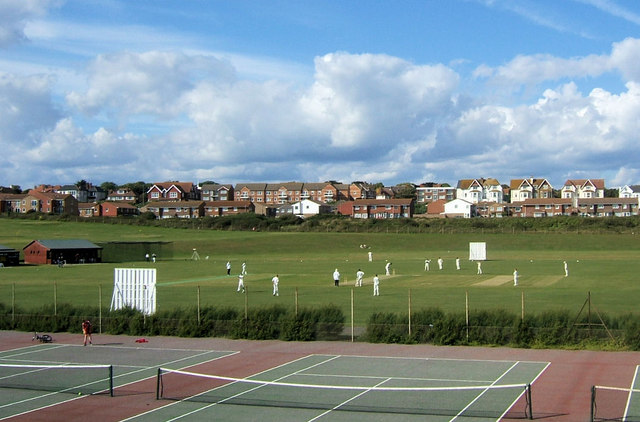
The Seaford Times account is unambiguous: the club was officially formed in May 1860, Captain Lewis Crook was involved in its formation and became its president, and matches were played on the common, a piece of ground that became known locally as the Cricketfield.
Seaford Cricket Club's own published history is more cautious. It notes that the origins "remain unclear." Its earliest nineteenth century entry is 5 May 1865, when "Eleven of the Seaford Artillery Volunteers went to Hailsham to play a cricket match" and won. An August 1879 scorecard has Seaford residents beating a visiting side by nine wickets, with one L. Crook opening the batting for the visitors and collecting a pair (out without scoring in both innings). An engraved bat records T. Woolgar taking the highest batting average for Seaford Cricket Club in 1881. The club then states that it "seems to have been established in 1891/2 by members of the local Sussex Volunteers C Company," which also created the football club and the fire brigade.
The two accounts are not as far apart as they look. A loose town side playing on the common from 1860, with Crook as its figurehead, would leave very little paper. A properly constituted club with officers, subscriptions and fixtures, run out of the volunteer company three decades later, leaves rather more. The 1879 scorecard is the detail that rewards attention: Crook was turning out for the visitors that day, not for Seaford, which suggests he was a patron and enthusiast of the game locally well before he was formally the club's man.
Football: The Seaford Rovers, 1882
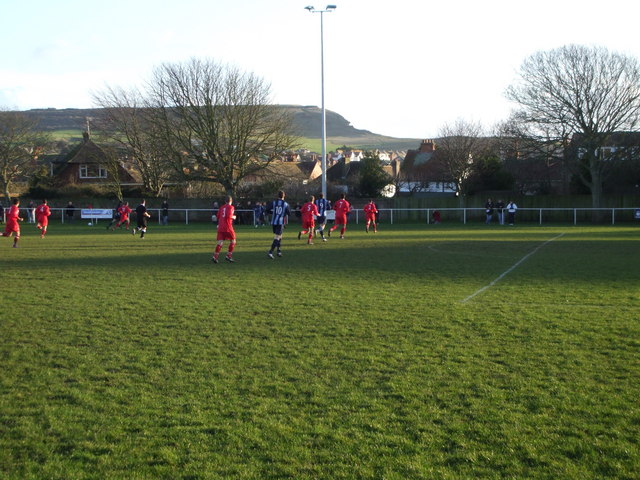
The football record is firmer. The first official football club in the town was the Seaford Rovers, founded around 1882. Captain Crook became its president and a Mr J. Bull its chairman, and the club joined the Sussex County Football Association.
In 1886 the Rovers entered the county association's Junior Challenge Cup for the first time. Two years later they won it, beating Burgess Hill by two goals to nil in a replayed final at the County Cricket Ground in Hove. For a town of Seaford's size in 1888, a county trophy lifted at Hove was a considerable thing.
The Rovers ran until 1896. Seaford F.C., founded in 1888 and treated as their successor, won the Lewes League in 1908 and the Sussex Junior Cup in 1910, and the line continues through to Seaford Town, who play at the Crouch and were founder members of Sussex County League Division Two in 1952.
The Volunteers, and the Fire Brigade
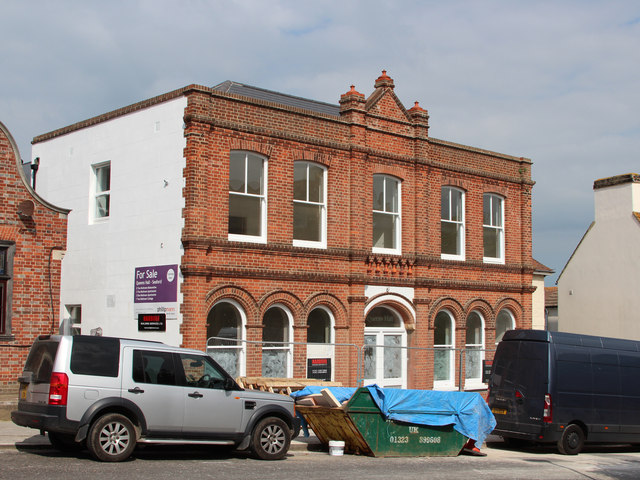
The third strand runs through the volunteer movement. When the 1st Sussex Engineer Volunteer Corps expanded in 1892 it raised two new companies: B at Newhaven and C at Seaford. The Seaford company drilled at the Queen's Hall in Broad Street, and in the 1908 reorganisation that created the Territorial Force it was absorbed into the Sussex Fortress Royal Engineers.
That company matters because it was the town's ready-made pool of fit, drilled, disciplined men, and in a late Victorian seaside town those were precisely the men you wanted on a fire appliance. Seaford's brigade stayed a volunteer operation for decades afterwards. When the Empire Cinema on Sutton Road burned in the early hours of 28 February 1939, the crews were led by Chief Officer John Henry Reeves, and the town did not become a statutory fire authority in its own right until the Fire Brigades Act of 1938 took effect.
What We Still Do Not Know
Crook is a frustrating subject, because the institutions are better documented than the man. There is no confirmed birth or death date, no known address in the town, and no photograph. Seaford Museum and Heritage Society, which holds the deepest local collection, is the obvious place to start, along with the surviving volunteer corps records.
What is not in doubt is the shape of what he left. Seaford Cricket Club still plays at the Salts. Seaford Town still plays at the Crouch. The fire station still turns out. Three institutions, all still running, all traceable back through the same Victorian gentleman who, as the Seaford Times put it, simply loved all sport.
Sources
- Seaford Cricket Club club history (Play-Cricket): 1776 records, the 1865 Artillery Volunteers match, the 1879 scorecard, the 1891/2 C Company account
- Seaford Times, archived pages on Seaford Cricket Club and Seaford Football, recovered in the Discover Seaford archive (original site now defunct)
- Seaford Town F.C. (Wikipedia): Seaford Rovers 1882, the 1888 Sussex Junior Cup, later club history
- 1st Sussex Engineers (Wikipedia): B and C Companies raised 1892 at Newhaven and Seaford, the Queen's Hall drill hall, the 1908 reorganisation
- The 1st Sussex Artillery Volunteers (Shoreham Fort): the 1859 to 1860 volunteer artillery movement in Sussex
- History of East Sussex Fire and Rescue Service: the Fire Brigades Act 1938 and borough fire authorities
- History of Seaford (Seaford Museum and Heritage Society)