Banoffee Pie — World-Famous, Invented Eight Miles from Seaford
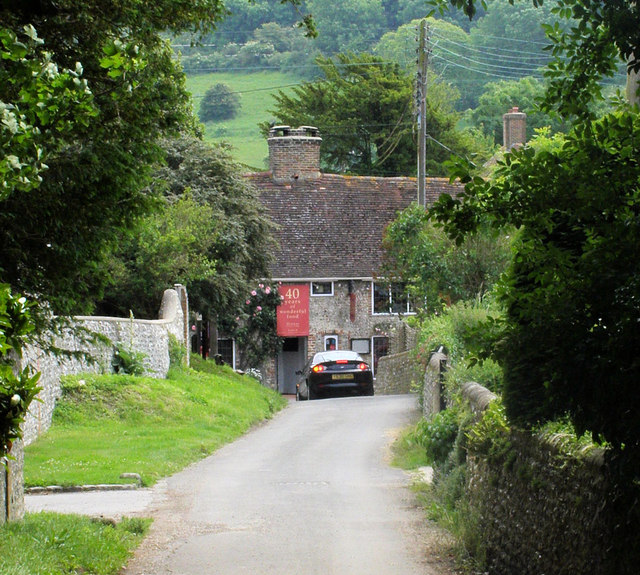
Britain's favourite pudding was worked out in 1972 in a 14th-century flint cottage in Jevington, eight miles up the Downs from Seaford. This is the story of the Hungry Monk, chef Ian Dowding, owner Nigel Mackenzie, a tin of condensed milk, a £10,000 challenge, Margaret Thatcher, the blue plaque that marks the spot, and the Seaford restaurant the chef went on to run.
Banoffee pie is on pub menus from Penzance to Inverness and in every supermarket chiller, and it is copied as far away as Russia and the United States. Few people eating it know that it was worked out in a flint cottage in Jevington, a village tucked into the Downs eight miles from Seaford. The story behind it is better than the pudding, and the pudding is very good.
A monks' rest with no running water
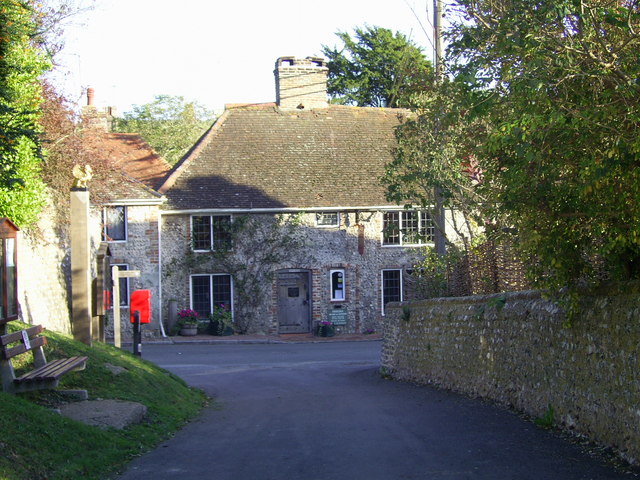
The Hungry Monk opened in 1968. Nigel and Sue Mackenzie, newly married, bought a former monks' rest house on Jevington Road, a low flint building with brick corners whose oldest parts are said to date from the 14th century, and spent six months turning it into a restaurant. The cottage had no running water or drainage when they started. They filled it with antiques, candlelight and log fires and served French country cooking.
Their founding chef was Ian Dowding, 19 years old that year. He would stay long enough to become, in his own words, "the Banoffee Pie man".
Blum's Coffee Toffee Pie and a tin of condensed milk
The starting point was American. One of Dowding's early mentors, at a restaurant in Berkshire, had a treasured recipe brought back from Blum's, a San Francisco bakery, for a coffee toffee pie: a pastry case filled with toffee and topped with coffee-flavoured whipped cream. The toffee rarely worked: some days it refused to set, other days it dried like concrete.
The fix came from Dowding's sister, who mentioned that boiling an unopened tin of sweetened condensed milk in water for several hours turns the contents into a soft, reliable caramel. Dowding tried the pie again with that toffee, and it held. He and Mackenzie then experimented with fruit between the toffee and the cream. Apple was reasonable. Mandarin, in Dowding's recollection, was "downright disgusting". Then Mackenzie suggested banana. "Straight away we knew we had got it right," Dowding said later.
It went on the menu in 1971 or 1972, depending on who is telling it; the plaque says 1972. It was meant as a passing addition, and it never came off the menu in the forty years that followed.
Signor Banoffi
The name was Mackenzie's, a compression of banana and toffee. He first billed it as "Signor Banoffi's Pie" to sound Italian, and meant the name as a stopgap. The spelling drifted to "banoffee" as other people copied it, and by 1997 the word had made it into the Oxford English Dictionary as a general term for anything combining banana and toffee.
The Mackenzies printed the recipe in *The Deeper Secrets of the Hungry Monk* in 1974, a book that went on to sell more than 100,000 copies, and again in *In Heaven with the Hungry Monk* in 1997. Nestlé put it on its condensed milk tins. Then, in 1984, supermarkets began selling banoffee as an "American" pie. Mackenzie, not a man to let that pass, publicly offered £10,000 to anyone who could prove it had been invented anywhere other than Jevington. Nobody collected.
Number 10 and the "invented" question
The pudding's most famous fan was Margaret Thatcher, who reportedly made it herself and served it at Number 10. Dowding has also said members of the Royal Family were partial to it. The old seaford.co.uk dining listing was still repeating the Thatcher rumour decades later.
The only real disagreement is about a word. Mackenzie was happy to say the Hungry Monk invented banoffi pie; Dowding, who did the cooking, is more careful. "I didn't invent it," he has said. "It evolved." He points out that nobody trademarked it and says he has no regrets about that. "It was serendipity, and a fantastic combination of ingredients. Bananas and toffee just go so well together."
What the original actually is
Most of what is sold under the name is not the Hungry Monk version. The recipe as printed in the restaurant's books has:
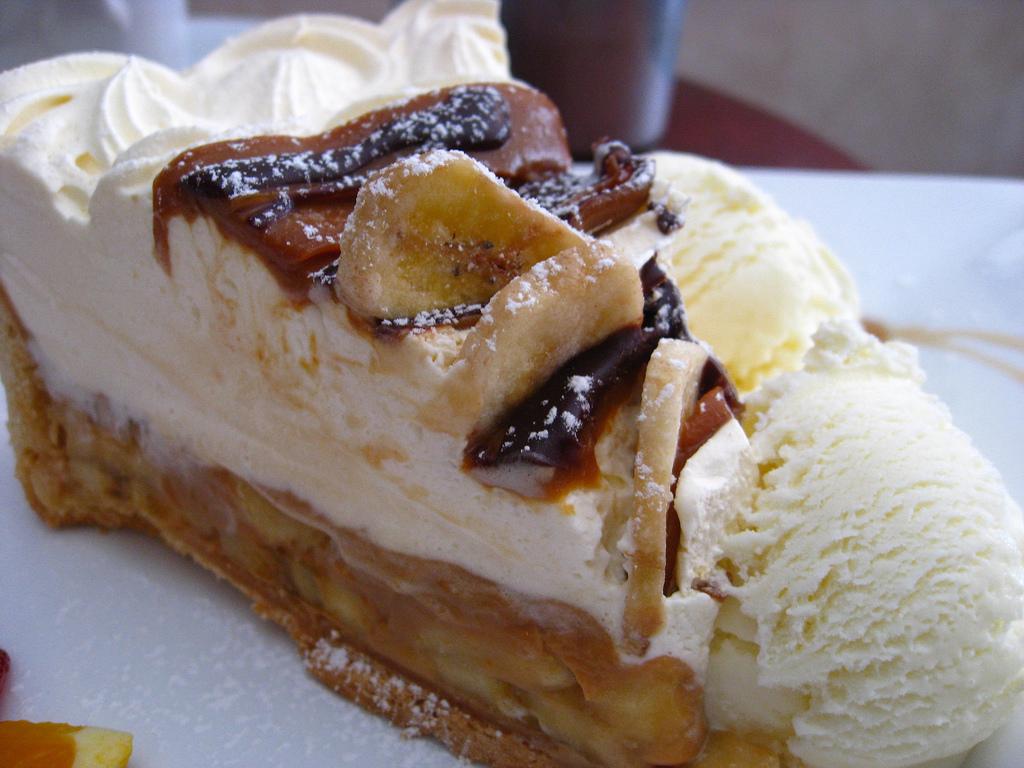
- A French sweet shortcrust case (9 oz flour, 1 oz icing sugar, 4.5 oz butter, an egg and a yolk), baked blind in a 10-inch tin. Not a biscuit crumb base.
- One and a half tins of condensed milk, boiled unopened for three and a half hours, then cooled completely before opening.
- Five or six firm bananas, sliced.
- Double cream whipped with a teaspoon of instant coffee and a spoonful of caster sugar, finished with a dusting of freshly ground coffee.
Dowding has been blunt about the biscuit-base, aerosol-cream versions that took over: they are not the pudding he made.
The last lunch
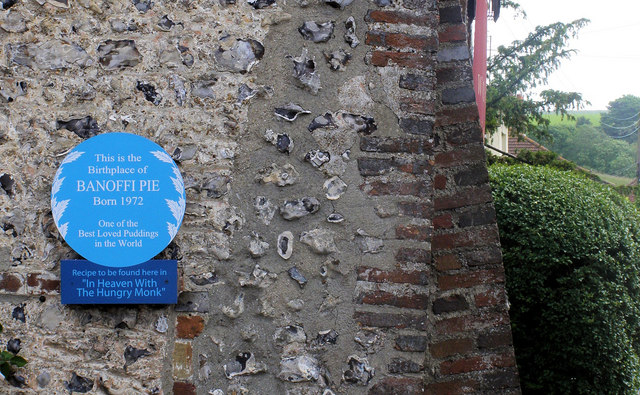
The Hungry Monk was still in the Michelin guide, and had been visited by Queen Sofia of Spain the previous year, when the Mackenzies served their last Sunday lunch on 8 January 2012. After 44 years the running costs had caught up with the business, and the building became three holiday lets, now known as Hungry Monk Cottages. Before he left, Nigel Mackenzie fixed a blue plaque to the flint wall facing Willingdon Lane. It reads: "This is the Birthplace of Banoffi Pie. Born 1972. One of the Best Loved Puddings in the World." Mackenzie died in Lewes in 2015, shortly after his 71st birthday.
The Seaford connection
Ian Dowding did not go far. In 1988 he and his wife Dawn opened their own restaurant, Quincy's, in Seaford, and ran it until they sold up in 2000. He then taught cookery at Sussex Downs College, cooked for television series including Channel 4's *Regency House Party*, and now lives in Herstmonceux. In his seventies he published *Fish Bananas*, a collection of 400 recipes from a fifty-year career, with the original banoffi recipe inside. "I'm the Banoffee Pie man and I'm proud of that," he told Sussex Life. "It has opened doors for me."
Can you still eat it locally?
Not the original: the restaurant is gone and nobody serves a licensed Hungry Monk banoffi. What you can do is walk to the plaque. Jevington is on the South Downs Way about eight miles from Seaford: follow the Cuckmere up to Alfriston, take the Way east over Windover Hill, and drop into the village, where the plaque is on the corner of Jevington Road and Willingdon Lane. Then go home and make it properly: pastry, three and a half hours of patience with a tin, and no aerosol.
Sources
- Ian Dowding, The Completely True and Utter Story of Banoffi Pie
- Sussex Life / Great British Life, Everything you need to know about banoffee pie, from its creator
- Sussex Life / Great British Life, Ian Dowding: 'The Royal family love my Banoffi Pie'
- SussexLive, The Hungry Monk: the Sussex restaurant where banoffee pie was invented that is no more
- Harpers Wine & Spirit, Iconic Sussex restaurant closes (January 2012)
- Wikipedia, Banoffee pie
- Open Plaques, Banoffi Pie blue plaque
- Historic England, Hungry Monk Restaurant, Monk's Rest, list entry 1181653
- Scrumpdillyicious, Banoffi Pie: the original Hungry Monk recipe
- seaford.co.uk archive, Where to Eat listing for the Hungry Monk (Discover Seaford archives)