WWII in Seaford: Military Camps, Canadian Troops and D-Day Preparations
During the Second World War, Seaford was transformed into a military town. Canadian troops filled the schools, tanks lined the streets, and the abandoned village of Tide Mills became a live-fire training ground. From the Dieppe Raid to D-Day, here's how the war shaped Seaford.
A Town Goes to War
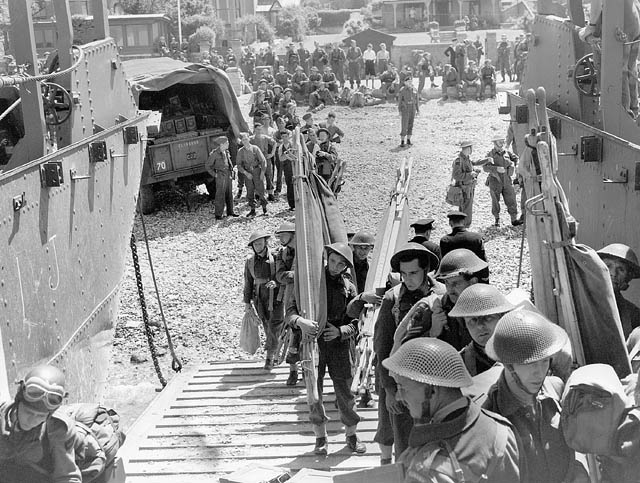
When war was declared in September 1939, Seaford's quiet seaside character changed almost overnight. The town sat on the front line of Britain's coastal defences, directly facing occupied France across the English Channel. Its beaches, cliffs, and downland were requisitioned for military use, and thousands of troops, many of them Canadian, moved in.
The whole of the South Downs behind Seaford became an intensive training area. Oil pipelines were laid along the seafront to ignite the sea as an anti-invasion barrier, with storage tanks hidden in Bishopstone churchyard and surrounding fields. Five-inch coastal guns were positioned near Claremont Road and at Tide Mills. Four wooden observation towers were erected between The Buckle and Newhaven to watch for enemy activity in the Channel.
The Canadians Arrive
From the summer of 1941, Canadian forces were tasked with defending the Sussex coast from Newhaven to Worthing. An estimated 330,000 Canadian soldiers passed through training in the wider Sussex area during the war, and Seaford became one of their main bases.
The Canadians requisitioned at least seven of Seaford's school buildings as billets: St Wilfrid's, Tyttenhanger, Ladycross, Seaford Ladies College, Chesterton, Stoke House, and Newlands. The Downs School was made into a Canadian headquarters, troops stripped all the wooden panelling for heating fuel when coal ran short. The Royal Navy took over St Peter's School.
Corsica Hall became the social centre of wartime Seaford. Canadian military bands played weekly dances there, and the troops played football against English PT instructors at the Crouch ground. For several years, Seaford was as much a Canadian town as a British one.
The Dieppe Raid
On 19 August 1942, Allied forces launched Operation Jubilee, the disastrous raid on the French port of Dieppe. Many of the troops who took part had trained in the Seaford area. The 2nd Canadian Division, which included the Essex Scottish, Royal Hamilton Light Infantry, and South Saskatchewan Regiment, bore the brunt of the assault.
In the weeks before the raid, commandos billeted in Crouch Gardens conducted nightly reconnaissance missions off the French coast by motor torpedo boat from nearby Newhaven. Among them were Brian Reeves and Frank Clark, who had previously taken part in Operation Claymore, the March 1941 Lofoten Islands raid that captured a German Enigma machine.
The Dieppe Raid was a costly failure, with over 3,600 Canadian casualties. But the hard lessons learned directly shaped the planning for D-Day two years later.
Under Attack
Seaford itself came under fire during the war. German aircraft conducted machine-gun strafing runs over the town, one attack near Southdown Road damaged a house corner. In November 1942, a firebomb struck the seaward side of the Ritz Cinema.
The most tragic incident occurred at Pelham Place, where a bomb trapped a girl named Betty Hamper by her legs and killed a woman named Mrs Morley, one of Seaford's documented civilian fatalities. An unexploded bomb landed on the doorstep of the Plough pub in Church Street. Three RAF aircraft crashed on the seafront in 1941.
The Air Raid Control Room operated from the Council Building at the Crouch. Dorothy Trethowan ran the sirens, with lookouts on Seaford Head phoning in colour-coded warnings of approaching raids.
Tide Mills: A Village Destroyed
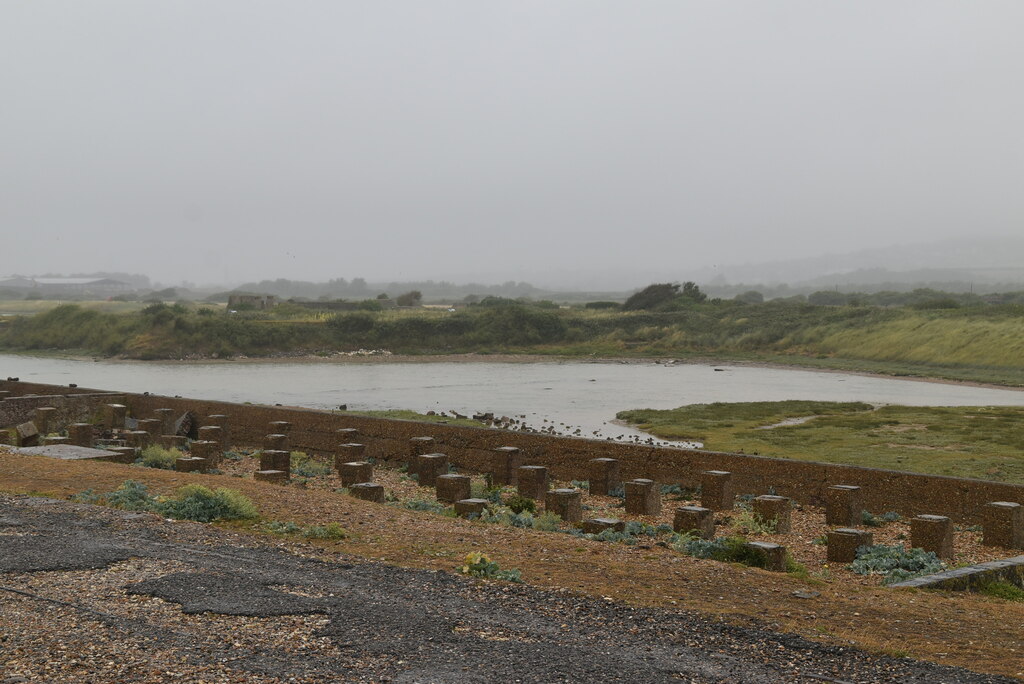
At the declaration of war, all remaining inhabitants of the already-declining Tide Mills hamlet were forcibly evacuated. The abandoned buildings served three military purposes: clearing the field of fire to protect Newhaven Harbour, providing a training ground for urban warfare, and denying cover to potential invaders.
Canadian troops used the empty cottages for live-fire street fighting exercises. Bullet marks in the surviving stonework date from this period. The village, already in decline since the 1930s, never recovered. Its ruins remain today as one of Sussex's most atmospheric historical sites.
D-Day Preparations
By the spring of 1944, Seaford was part of the vast military buildup for Operation Overlord. American forces constructed concrete tank roads on Seaford Head. In the days before 6 June, tanks were lined up at Tyttenhanger School and along Sutton Avenue, a visible massing of armour that told residents something momentous was coming.
A large red flare was launched over Seaford during the invasion, believed to be a diversionary signal. After D-Day, the town gradually emptied of troops as forces moved to the Continent.
After the War
Peace brought a slow return to normality, but the scars remained. School buildings were returned in damaged condition, interiors stripped, fabric worn from years of military use. Tide Mills was never rebuilt. The concrete roads on Seaford Head can reportedly still be traced.
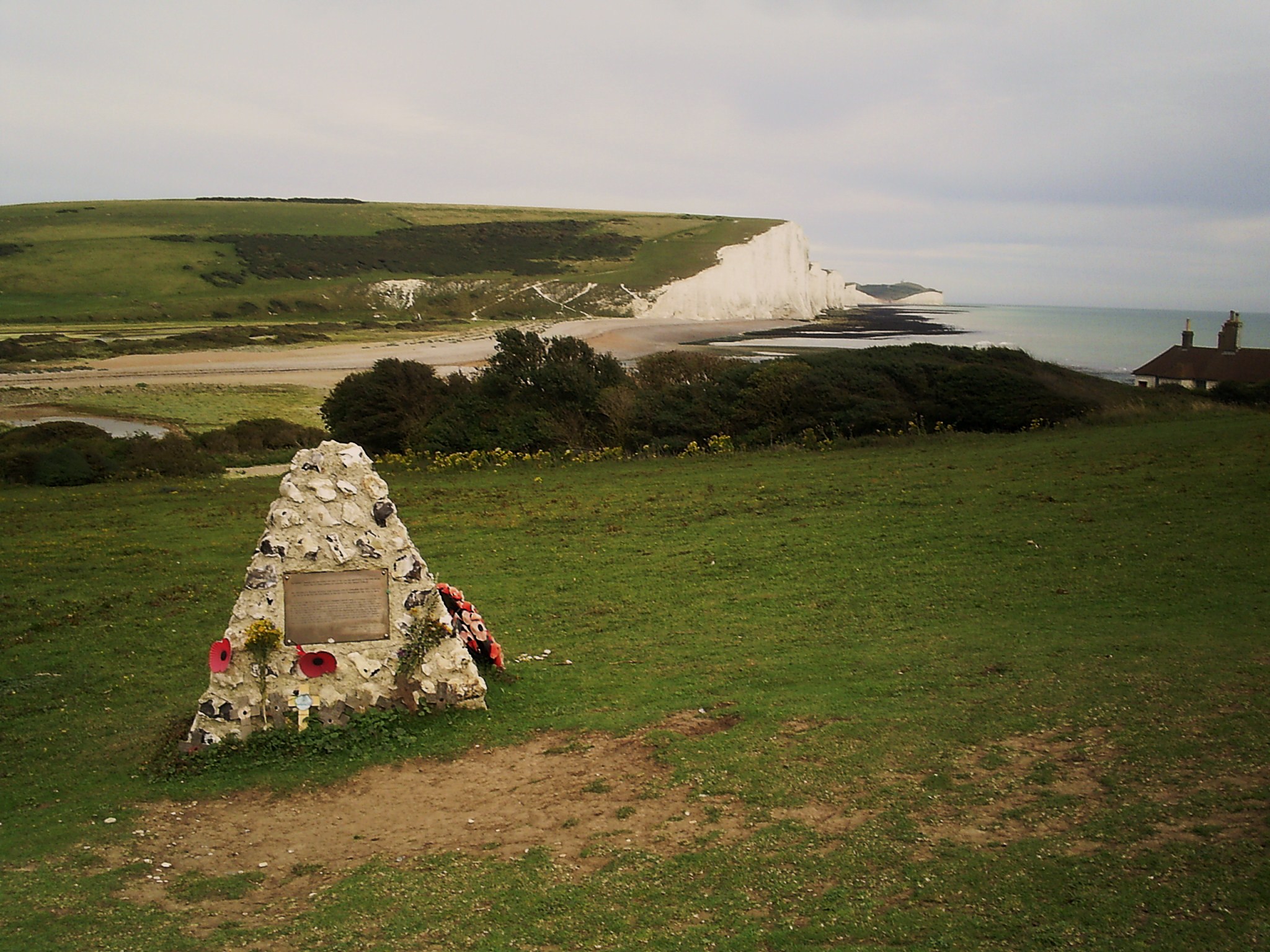
Some who served here never left. Seaford Cemetery contains Commonwealth War Graves Commission headstones marking the final resting places of servicemen who died during training or from wounds. Their presence is a quiet reminder that for six years, this small Sussex town played its part in the largest conflict in human history.
Sources: Seaford Museum & Heritage Society, D-Day exhibition (seafordmuseum.co.uk); Kevin Gordon, *Preparations for Dieppe and D-Day* (sussexhistory.net); Sussex History, *WW2 in Seaford and Lewes* (sussexhistory.net); Seaford Times archive (recovered via Wayback Machine); Commonwealth War Graves Commission, Seaford Cemetery (cwgc.org)