The Smugglers of Seaford: Free Trade on the Sussex Coast
Through the 18th and early 19th centuries, Seaford and the neighbouring Cuckmere Haven were among the most productive landing grounds in the smuggling capital of England. Gangs of 200 or 300 men, French luggers anchored offshore, revenue officers tied up and tipped into ditches, and a town that quietly chose sides. This is the story of Seaford's free traders.
The Smuggling Capital of England
In the 18th and early 19th centuries, Sussex was the smuggling capital of England, and the coast from Birling Gap to Seaford Bay was as productive as anywhere on the south. Successive governments taxed everyday goods at punitive rates to pay for wars with France: tea, brandy, gin, tobacco, silk, lace, even playing cards. The mark-up between a French quayside in Dieppe and an English consumer was enormous, and the coast between Beachy Head and Newhaven offered every advantage a smuggler needed: long beaches with no harbour to police, a sparse population, steep chalk cliffs hiding what went on below, and a town (Seaford) that had lost its harbour to Newhaven in 1539 and had no Customs House. Locally these were not criminals; they were the free traders, and public sympathy was overwhelmingly with the men landing the kegs.
Cuckmere Haven: The Perfect Landing Ground
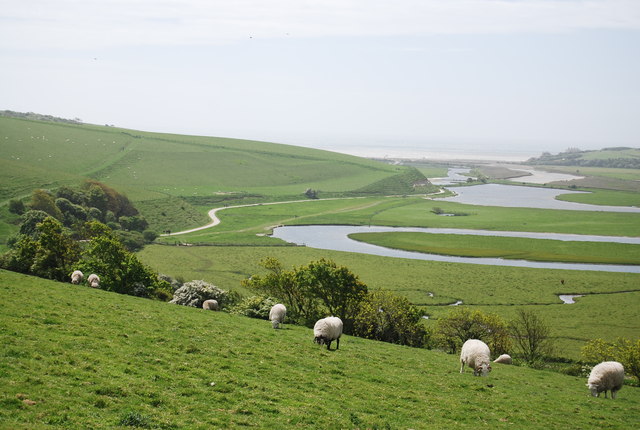
The haven where the River Cuckmere meets the sea is the geographical heart of the local story: a flat shingle beach, shallow water that a French lugger could approach at the right tide, a floodplain screened by the meanders of the river and the bulk of Seaford Head, with quiet inland roads running north through Litlington and Alfriston towards London. By night, a string of tubmen with pairs of small kegs slung over their shoulders could be inland and out of sight inside an hour.
The records make the scale clear. In September 1783, two separate gangs, each numbering between 200 and 300 men, descended on Cuckmere Haven inside a single week. On the first occasion the sea was extremely rough; they landed and carried their goods off anyway, in open defiance of the lone customs man on duty. A contemporary newspaper reported that it was quite common in those years to see a dozen smuggling vessels sitting off the coast in broad daylight, waiting for night.
Gabriel Tomkins and the Alfriston Gang
One name surfaces repeatedly in the early 18th-century Seaford records: Gabriel Tomkins, a bricklayer from Tunbridge Wells who became leader of the Men of Mayfield well before 1717. Between 1717 and 1721 the Mayfield Gang ran cargoes onto the beaches at Lydd, Fairlight, Hastings, Eastbourne, Seaford and Goring. Tomkins was eventually charged not only with smuggling but with two counts of assault for the trick that defined his approach to enforcement: tying up Revenue men and disposing of them, one in a ditch at Goring and another at Seaford.
By mid-century the Alfriston Gang had taken over the Cuckmere runs. Their headquarters, six miles up the valley from Seaford, was the Market Cross Inn (now Ye Olde Smugglers Inn) under Stanton Collins, who ran the operation from a building with 21 rooms, 48 doors, six staircases and a network of hidden tunnels, one running from under the bar floor down towards the river. The gang were never caught smuggling. Collins was finally arrested in 1831, for burning a barn, tried at Lewes Winter Assizes that December, and transported to Tasmania for seven years.
The Seaford Pubs and the "Shags"
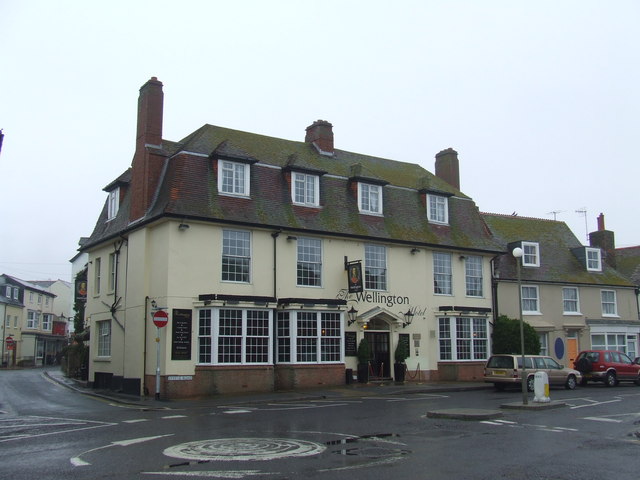
In Seaford itself the trade ran through the inns. The Old Tree Inn, run by the Swaine family, was the town's gossip exchange and a sounding board for smuggling intelligence. The New Inn on the seafront, later renamed the Wellington Hotel after a visit from the Duke of Wellington, was the other main hub. Townspeople earned the nickname Shags or Cormorants for their willingness to combine smuggling with the looting of wrecked vessels; in some accounts, false lights were shown from the shore to draw ships onto the foreshore so the cargo could be plundered. In November 1809, seven vessels (one naval sloop and six merchantmen) sheltering in Seaford Bay miscalculated their position and grounded together. The town did very well out of it.
The Coastal Blockade and the End of the Trade
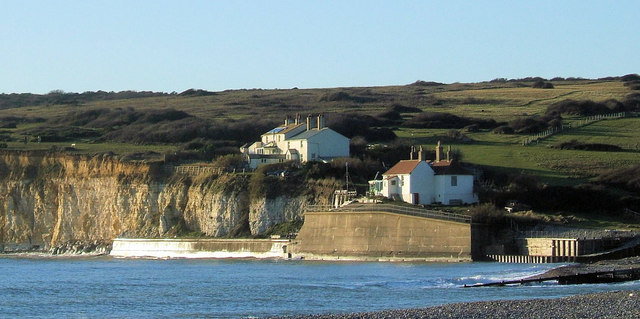
The state's answer arrived in 1817 with the Coastal Blockade, manned by Royal Navy crews, and in 1821 with the establishment of the National Coast Guard. A row of coastguard cottages went up on the clifftop above Cuckmere Haven shortly after 1822, specifically to put eyes on the beach. The trade did not stop overnight. As late as 1822 a coordinated double landing at the haven saw smugglers come ashore with 300 tubs of foreign spirits; the customs officers managed to seize 50, but a second vessel running tea, silks and tobacco came in nearby and got every keg off undetected, because the Revenue had been drawn to the spirits.
Within a generation the combination of organised coastguards, falling tariffs and the arrival of the railway in 1864 had finished the trade. By the time the Victorian visitors began arriving to admire the cliffs at Splash Point and the meanders at Exceat, the kegs and the batsmen were gone, and only the cottages, the inn names and the place itself remained.
Sources:
- Smuggling.co.uk, "Smuggling on the Sussex coast: Cuckmere and Hastings" (smuggling.co.uk/gazetteer_se_17.html)
- Smuggling.co.uk, "Smuggling gangs of East Sussex and their inland bases" (smuggling.co.uk/gazetteer_se_16.html)
- Wikipedia, "Cuckmere Haven" (en.wikipedia.org/wiki/Cuckmere_Haven)
- Walk the Chalk, "Smuggling" (walkthechalk.uk/discover/heritage/smuggling)
- Unknown Kent & Sussex Magazine, "Alfriston used to be the home of smuggling" (unknownkentandsussex.co.uk/alfriston-smugglers)
- Seaford Museum & Heritage Society, "History of Seaford" (seafordmuseum.co.uk/history/history-of-seaford)
- Local archive notes on Seaford inns and the Heritage Trail held at `Thoughts-Ideas-Expansion/archives/seaford-sussex-co-uk.md`