Cricket Below Sea Level: The Story of The Salts
How a strip of drained salt marsh, kept dry only by Seaford's shingle bank, became the permanent home of the town's cricket, rugby and football clubs. The Salts Recreation Ground has hosted competitive sport since 1923, with cricket records going back to 1776 and a 1949 festival match umpired by Jack Hobbs.
A Pitch on Drained Marsh
The Salts Recreation Ground sits a few hundred metres back from Seaford's seafront, hemmed in by Marine Parade, Steyne Road and St Crispians. Stand on the cricket square on a calm summer afternoon and the sea is invisible: a wall of compacted shingle and a row of seafront flats block the view. That shingle is the only thing keeping the wicket dry. The Salts occupies part of the bed of the River Ouse that, until the medieval period, ran east along the back of the beach before turning out to sea at Splash Point. When the river was rerouted to Newhaven in 1539, the old channel became a low-lying salt marsh, and what is now one of the busiest recreation grounds in East Sussex began life as drained ground sitting below the level of the high tide.
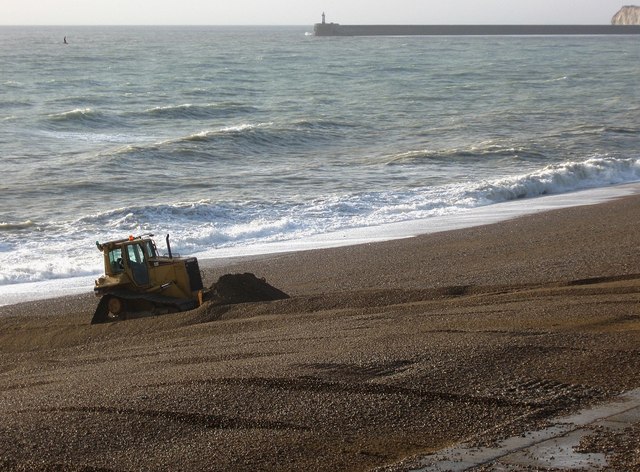
That geography defines everything about the place. Without the shingle bank running west from Splash Point, and without the regular replenishment campaigns that have shored it up since the early 1980s, The Salts would flood. The 2008 storms that left Marine Parade under several inches of water came within a few metres of doing exactly that.
The Cricket Came First
Cricket in Seaford predates the recreation ground by more than a century. The earliest recorded match is reported in Sussex newspapers of 15 and 16 May 1776, between the gentlemen farmers' sons of the east and west sides of the Lewes River, played on Blatchington Down. By 1865 the Seaford Artillery Volunteers were defeating a combined Hailsham and Eastbourne side. The club we know today was formed in May 1860 under the presidency of Captain Lewis Crook, a Victorian who seems to have had a hand in nearly every sporting institution the town produced.
For its first half-century the club moved between borrowed pitches: the so-called Cricketfield on the common, the New Field at East Blatchington (occupied by 1912), and odd corners of farmland. The East Blatchington ground was sold for development in March 1915. When The Salts was finally laid out in 1923, the cricketers had a permanent home for the first time in their history.
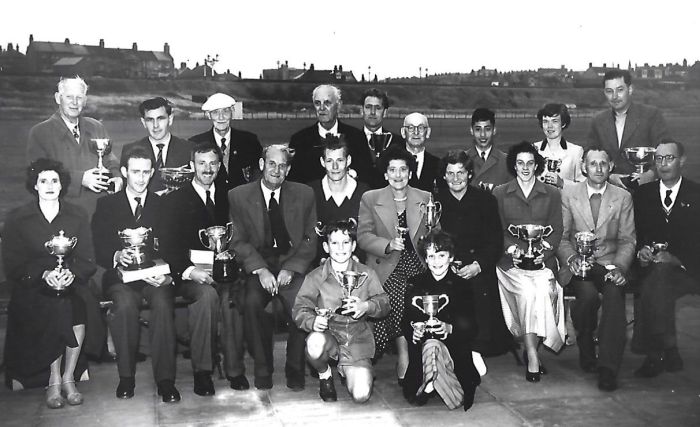
Facilities, though, stayed deliberately rustic. Until changing rooms opened around 1970, players walked across Marine Parade to use the Eversley Hotel. A proper clubhouse was only financed and built in 1987-88, with a further extension completed in 2010 to keep up with growing membership. The Seaford Museum holds posters from the 1940s and 1950s for the annual Salts cricket week, and on one occasion in 1949 the great Jack Hobbs umpired a festival match here, a remarkable footnote for a coastal club playing on what is effectively reclaimed marshland.
Rugby and the Bay Hotel Years
Seaford Rugby Football Club's path to The Salts was longer and rougher. The club formed in 1938, played one season (thirteen wins, nine losses, one draw, after an opening 40 nil thumping), then folded as the country went to war. The 1951 revival was led by Ron Beal, with help from what the club's own history calls "influential Welshmen". Early home games were played at Newlands School, with players changing in garages and washing under a garden hose.
By 1956 the club had settled at The Bay Hotel, with a home pitch on Steyne Road borrowed from Seaford College. The plot was lost in the mid 1960s when development began on what is now Seaford Head Lower School, and after a few unsettled seasons the club moved to The Salts in the early 1970s, opening its first proper clubhouse there. It has stayed put ever since, sharing the ground in a sometimes-uncomfortable alternation of seasons: cricketers leave the square in September, rugby takes over the outfield, and the cricketers return in April to mark out a new pitch.
The Football Side
Seaford's football clubs took a different route. The Seaford Rovers, founded around 1882 with Captain Crook again on the board, were the town's first official side and played on The Salts. By 1888 they had been succeeded by Seaford F.C., the ancestor of today's Seaford Town. Seaford Town moved to The Crouch in the early twentieth century, with a clubhouse dating to 1930 and floodlights installed for the 2007-08 season. The Salts kept hosting recreational and junior football, but the senior men's game now belongs to The Crouch a mile inland. The football pitches still marked out at The Salts run alongside the rugby posts and the cricket boundary, used by youth teams, local leagues and the kind of pickup game that has happened here for nearly a hundred and fifty years.
A Working Park
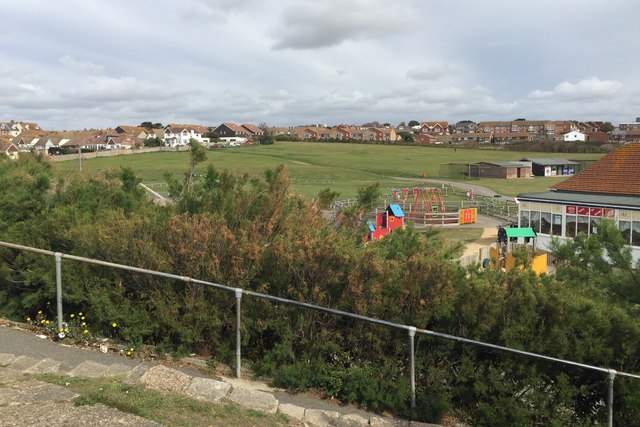
Beyond the three big games, The Salts has quietly absorbed almost every other communal use Seaford has needed. The Town Council records list a skate park, an outdoor gym, a basketball court, refurbished tennis courts (reopened in May 2022 with automated lighting), the Salts Café, a children's play area and the headquarters of the volunteer Seaford Lifeguards. Seaford Scouts and the youth-work charity The Base also operate from the site, which is the largest open space available for public hire in town: roughly 37,500 square metres of grass.
It is an odd inheritance. A Victorian dredging job below sea level, ringed by hotels and flats, defended by a bulldozed shingle bank, hosting nearly every team game the town has ever played. The Beachcomber pub that once stood at the corner of Marine Parade was demolished in 2012. The cinema next door is long gone. The railway has long since stopped running pleasure specials to seaside galas at the ground. The cricket square remains. So does the rugby clubhouse. So does the shingle.
Sources:
- Seaford Cricket Club, "History" on Play-Cricket (seaford.play-cricket.com/web_pages/history)
- Seaford Rugby Football Club, "History" (seafordrfc.club/a/history-8964.html)
- Seaford Town Council, "The Salts Recreation Ground" (seafordtowncouncil.gov.uk/the-salts-recreation-ground)
- Seaford Heritage Walks, "Salts Recreation Ground" (walkseaford.uk/the-salts)
- Local archive notes on Seaford Cricket Club, Seaford Town F.C. and the Seaford Rovers held in the project archive at `Thoughts-Ideas-Expansion/archives/seafordtimes-wayback.md`