Seaford's Pubs: A History of the Town's Drinking Establishments
From 18th-century coaching inns that hosted political intrigue to Victorian seaside hotels that welcomed royalty, Seaford's pubs tell the story of the town itself. Here's a tour through the centuries of the Wellington, the Old Plough, the White Lion, and the inns that have long since disappeared.
A Cinque Port's Thirsty Trade
Seaford's long relationship with drink is older than almost anything else in the town. As a limb of Hastings in the medieval Cinque Ports confederation, the port handled wine imports from Gascony and beer brewed for the Channel crossing, and inns clustered around the harbour to serve merchants, sailors, and the king's men. When the Ouse silted up in the 16th century and the town's maritime trade collapsed, those inns adapted, becoming coaching stops, smugglers' haunts, and eventually the seaside hotels of the Victorian era.
Three surviving pubs anchor the High Street today: the Wellington, the Old Plough, and the White Lion. Each has roots deeper than its current sign suggests.
The Old Tree Inn, Politics and Gossip
In the 18th century, Seaford was a rotten borough. With fewer than 40 voters but two seats in Parliament, it was one of the most corrupt constituencies in England, controlled by the Duke of Newcastle through his local fixers. Chief among them was Thomas Swaine, the Duke's major-domo, whose family ran the Old Tree Inn.
The inn served as what one historian called "an excellent sounding-board for local gossip", the place where votes were negotiated, grievances aired, and the Duke's wishes transmitted to his tenants. It was a working model of 18th-century politics conducted over beer. The Old Tree is long gone, but its role shaped Seaford's character for decades.
The Ship Inn and the Smugglers
The Ship Inn appears in 18th-century records less flatteringly: a contemporary complaint described "dung heaps between the Post Office and the Ship Inn", giving a sense of Georgian Seaford's sanitary standards. The inn stood close to the seafront at a time when smuggling was the town's open secret.
Sussex in the 18th and 19th centuries was the smuggling capital of England, with gangs running tea, tobacco, spirits, and lace from French luggers to hidden cellars inland. Seaford's isolated shingle beaches and the nearby Cuckmere Haven were notorious landing sites, and every coastal pub was suspected of playing a part. While the Alfriston gang at Ye Olde Smugglers Inne became the most famous, Seaford's own inns are believed to have quietly served the same trade, with cellars and outbuildings offering convenient hiding places.
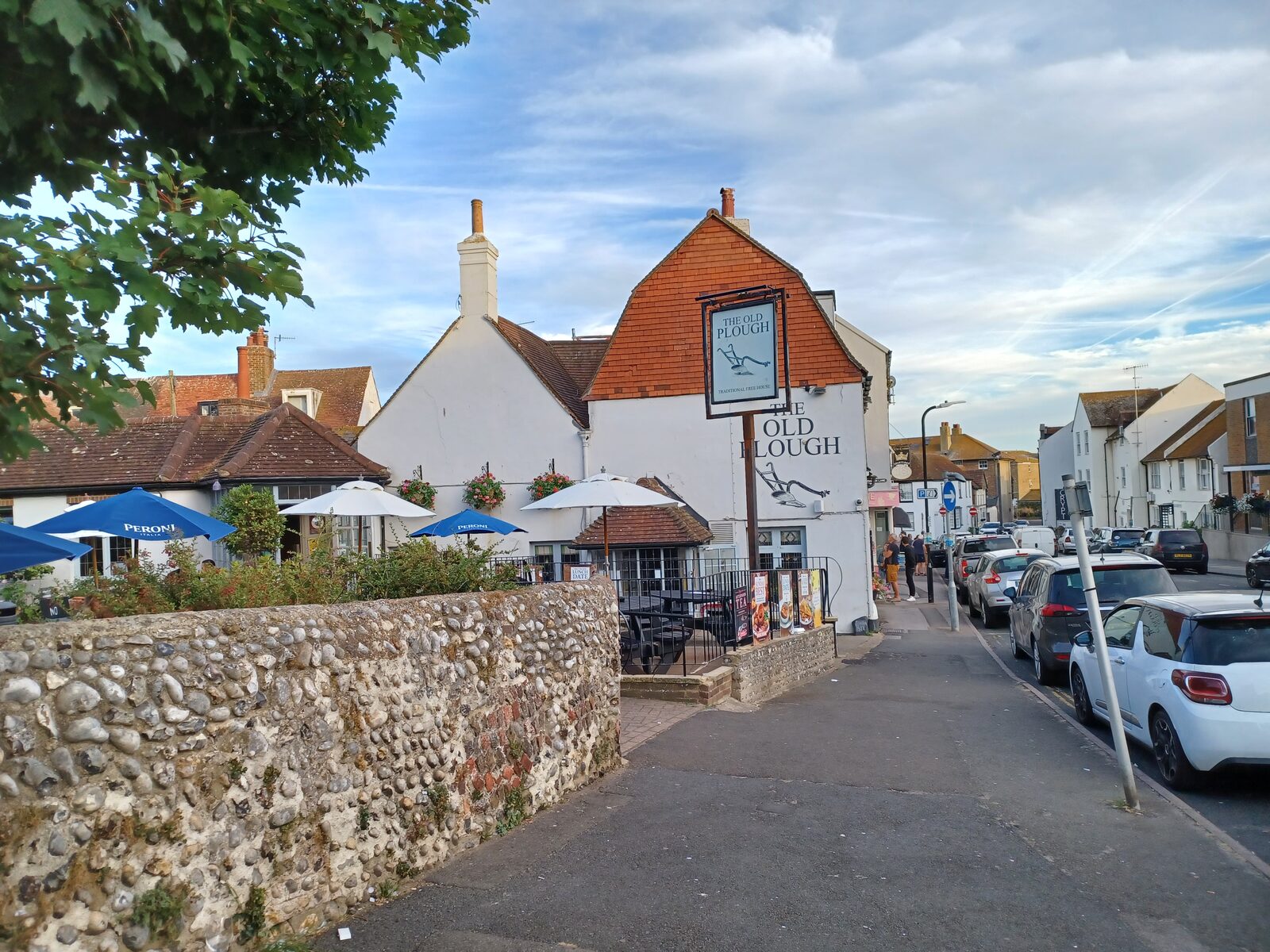
The Old Plough, Church Street's 16th-Century Survivor
Tucked down Church Street, the Old Plough is thought to be Seaford's oldest pub still trading, with origins as a coaching inn in the 16th century. Grade II listed, it retains exposed beams and low-ceilinged rooms that speak to its age. Photographs from around 1900 show it looking much as it does today, a reminder that for at least 400 years, the spot has been somewhere to get a drink.
The White Lion, A Coaching Inn on the High Street
The White Lion Hotel on the High Street operated as an 18th-century coaching inn, part of the network that moved travellers between London, Brighton, and Newhaven. Coaches changed horses at the White Lion, passengers dined and slept, and the inn's large yard, still partly visible, accommodated the stagecoach trade. As the railway arrived in 1864 and killed long-distance coaching overnight, the White Lion reinvented itself as a hotel for the new seaside visitors, a role it has filled ever since.
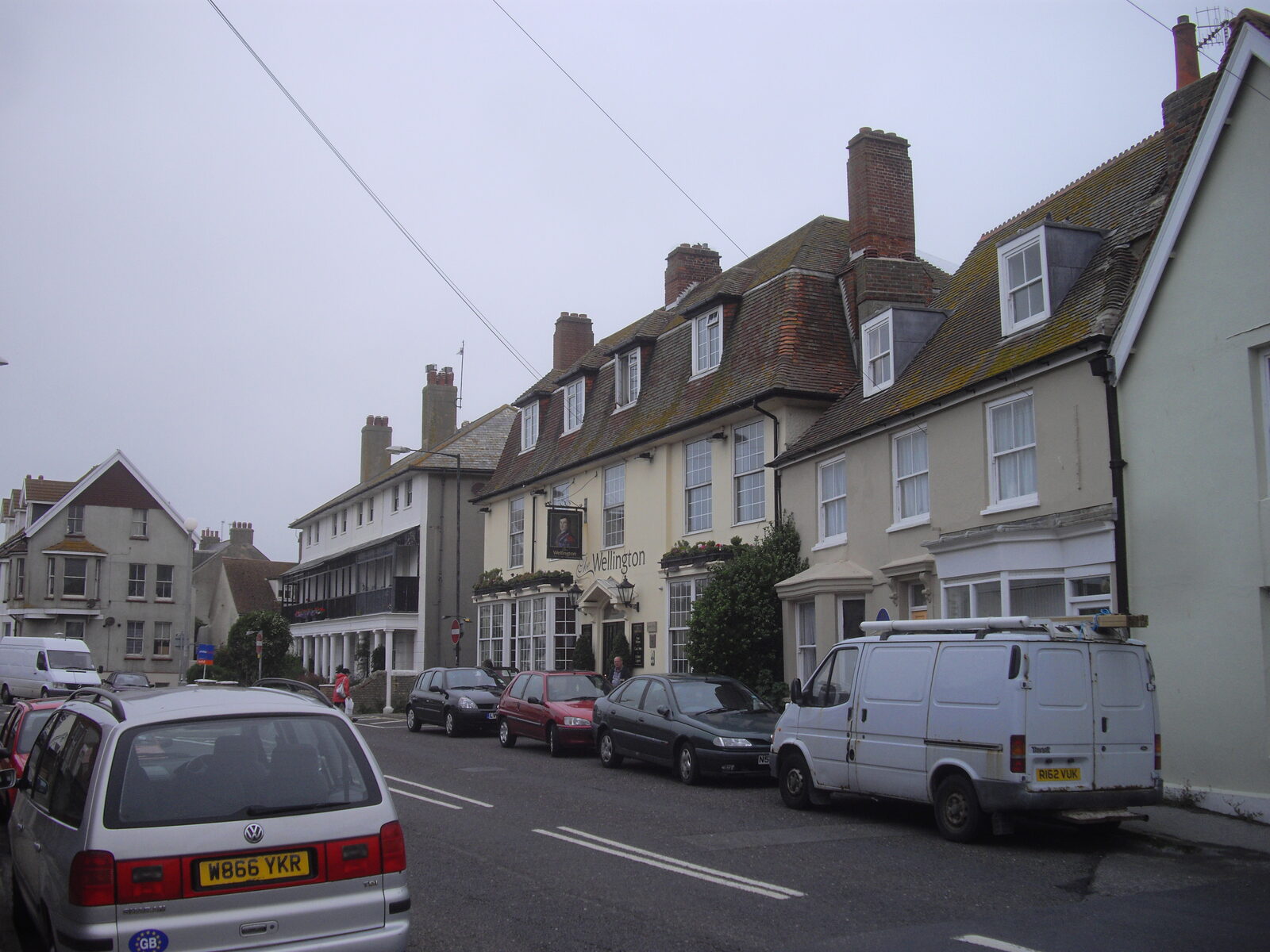
The Wellington, From New Inn to 'The Wellie'
When the Wellington Hotel opened on Steyne Road in the early 19th century, it was simply the New Inn. The proprietors renamed it to commemorate a visit by Arthur Wellesley, the 1st Duke of Wellington, whose victory at Waterloo in 1815 had made him a national hero. The new name stuck, and for two centuries locals have shortened it affectionately to "the Wellie". It remains one of the busiest pubs in the town centre.
Victorian Grandeur, The Esplanade and the Bay
Seaford's attempt to reinvent itself as a genteel Victorian resort produced hotels on a different scale. The Esplanade Hotel, opened in 1891 with more than 50 rooms, was the town's flagship, and in 1905 it hosted King Edward VII, cementing Seaford's credentials as a respectable seaside destination. Further up the hill, the Bay Hotel on Pelham Road offered a "less prestigious" but still fashionable alternative. Neither survives in its original role; the Esplanade was demolished and the Bay has been converted, but their sites remain part of the town's architectural memory.
The Buckle, A Name Older Than the Pub
At the western end of the bay, the Buckle Inn takes its name not from drinking culture but from the Pelham family coat of arms, a buckle granted by Edward III after Sir John Pelham captured the French King at Poitiers in 1356. The Buckle Bypass, Buckle Drive, and the Buckle Inn all descend from that heraldic device. The pub has been a landmark at the coast road junction for generations.
Still Pulling Pints
Seaford's pub count has risen and fallen with the town's fortunes, peaking during the Victorian resort years and thinning through the late 20th century as tastes changed. But the survivors still connect drinkers today with a chain of innkeepers stretching back to the coaching age. Raise a glass in the Old Plough or the Wellie and you're drinking on ground that Seaford has been drinking on for centuries.
Sources: Seaford Museum & Heritage Society, History of Seaford (seafordmuseum.co.uk); Seaford Currents, The Wellington Hotel (seafordcurrents.wordpress.com); Gravelroots Vintage Trail, Old Plough pub photographs (gravelroots.net); Heritage Pubs, Old Plough Seaford; Sussex Exclusive, Watch the Wall: Smuggling in Sussex (sussexexclusive.com); Seaford Heritage Trail, Blue Plaques guide