From Cinque Port to Beach Boats: Seaford's Fishing Industry
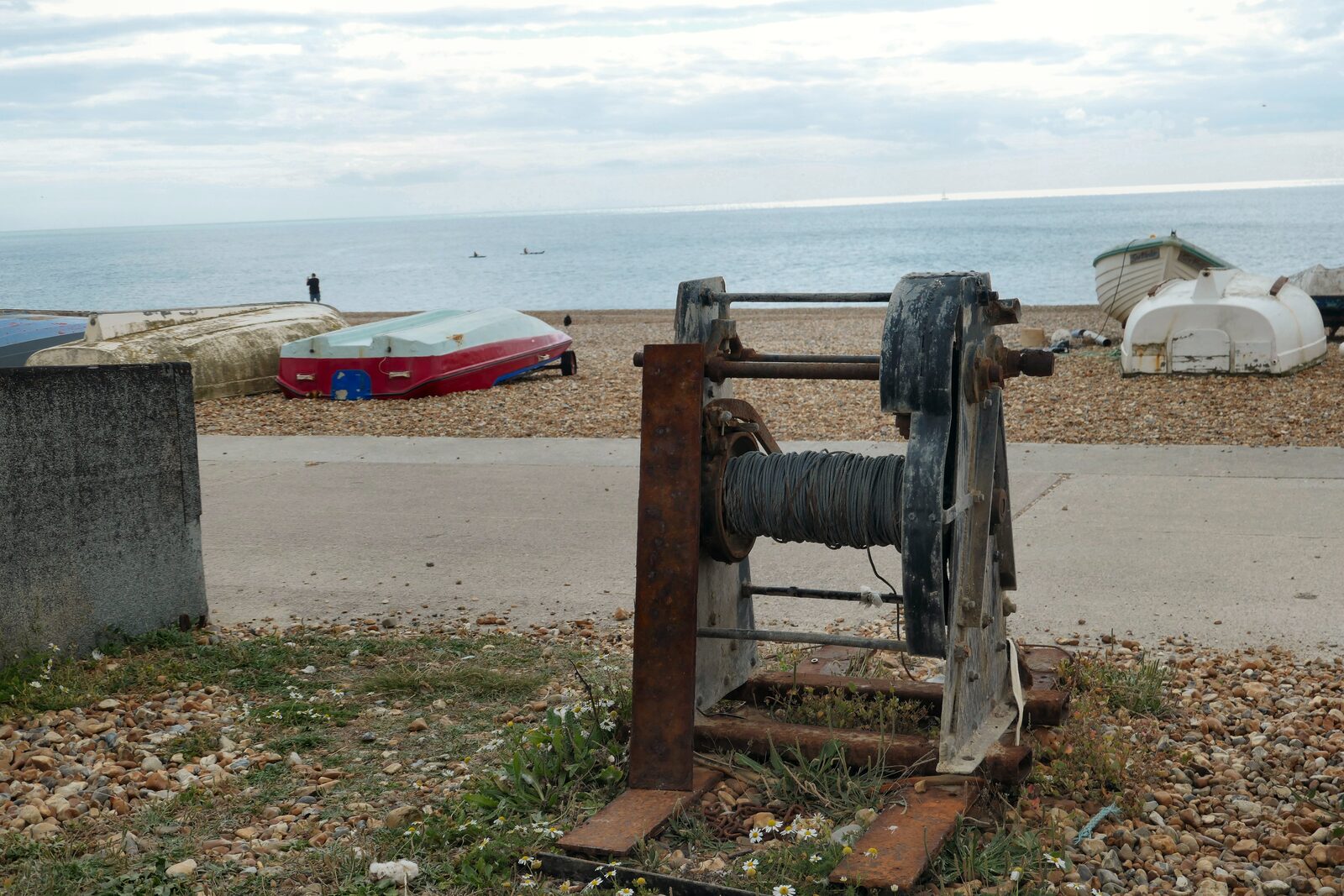
Seven hundred years ago Seaford was a Cinque Port whose fishermen sailed to Norfolk every autumn for the herring. By 1596 the fleet was down to one boat. The wooden hulls drawn up by winches at the eastern end of the beach today are the quiet last chapter of a very long story.
A Medieval Fishing Port
In 1229, in the reign of Henry III, Seaford appears in the official record as the chief subordinate limb of Hastings within the Cinque Ports confederation. By the early 13th century the town was already pulling its weight as a working harbour: building ships, provisioning them, importing wines from Normandy, and exporting the wool of Downland sheep across the Channel. And, more than anything, fishing.
The scale is striking by modern standards. In 1342 Seaford sent three ships to the French wars. By 1347 the town's official tally was five ships and 80 marines, a mariner workforce drawn from a population of perhaps a few hundred households. Seaford's Cinque Port status earned it the right, granted in 1298, to send two members to Parliament, a privilege rooted in the town's maritime contribution rather than its size.
The Long Voyage to Yarmouth
Many of these Portsmen were fishermen, and every autumn they sailed the length of the east coast in pursuit of one fish: the herring. The Cinque Ports' mariners, including Seaford's, claimed the ancient right of "den and strond" on the sandbank at the mouth of the River Yare in Norfolk, a right to beach their boats, mend and dry their nets, and pack and sell their catch on the strand.
The annual herring fair on those Norfolk dunes was so successful, year after year, that the temporary tents and booths gradually became permanent dwellings. The settlement that grew up there is now Great Yarmouth. In a real sense, an East Anglian town owes its existence to the autumn presence of fishermen from Seaford and the other Cinque Ports.
The River That Walked Away
Then Seaford's harbour walked away. For centuries the River Ouse had reached the sea behind a long shingle bar at Seaford, creating a low-lying natural harbour that small boats could enter on the tide. As the bar grew, the river had to pick its way along it; by the early 16th century the entrance was already silting. In 1539, possibly hastened by a major storm, the Ouse broke through the bar at its western end, near the village of Meeching. The new mouth was deeper, calmer and more useful than the old one. Meeching was renamed Newhaven, and Seaford was left with a beach, a marsh, and the memory of a port.
French raiders piled on the misery. Between 1350 and 1550 the town was burned several times. By 1596, when the fishing fleet was counted, Seaford was reduced to 38 householders, and seven of them, between them, owned a single boat.
Seven Fishermen, One Boat
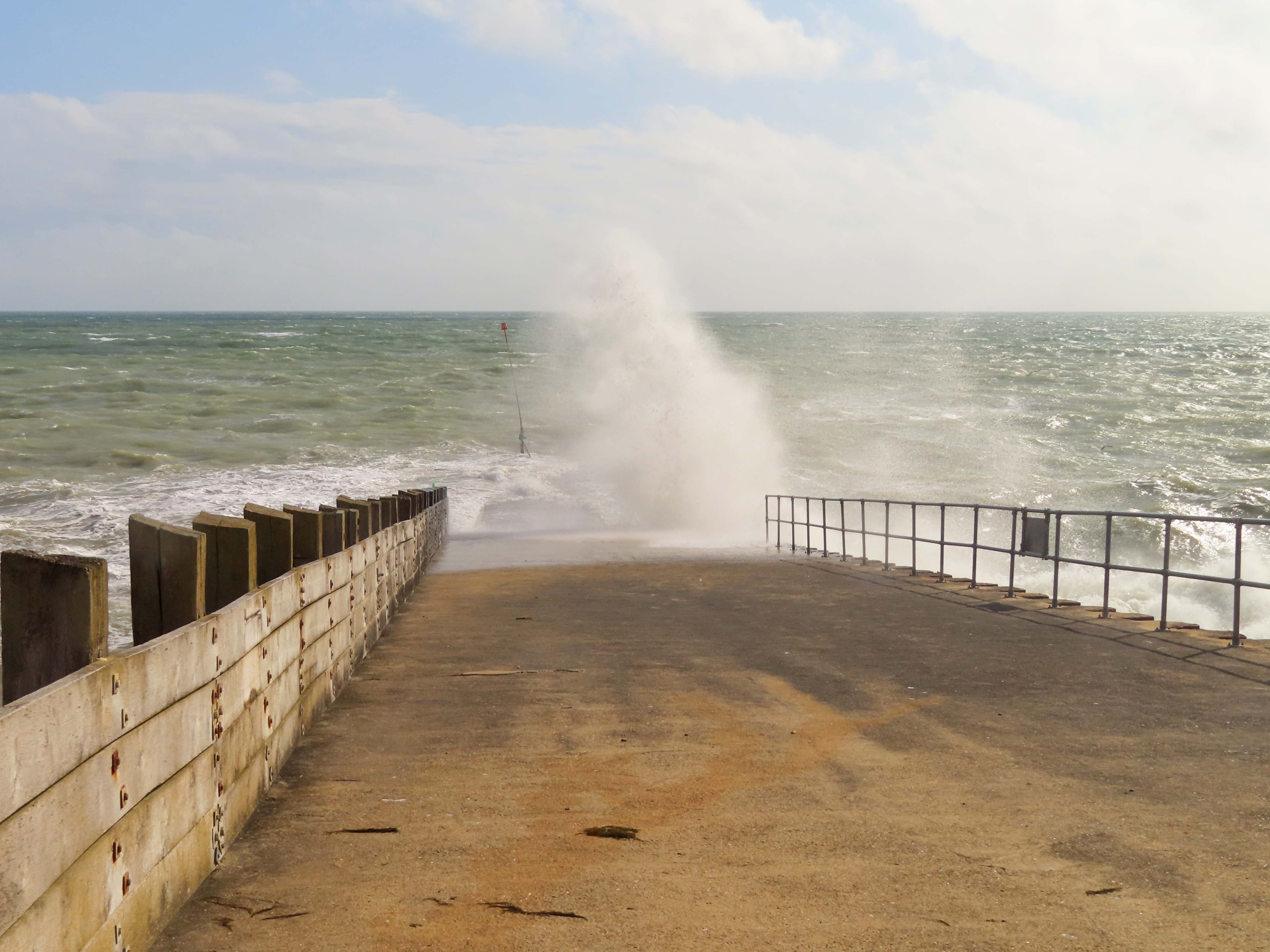
That number, seven fishermen, one boat, captures the next two and a half centuries of Seaford's relationship with the sea. Even as late as 1728, fishing rights were still being formally granted in the "land-locked old haven" behind the shingle, but the commercial scale was tiny. Without a working harbour, larger sailing craft simply could not be kept at Seaford; anything beyond a beach boat had to use Newhaven or Eastbourne.
The town turned, with some enthusiasm, to the alternatives. Seaford acquired a reputation as a wreckers' coast, locals known as the "shags" or "cormorants" for the speed with which they descended on any vessel grounded in the bay. Smuggling, helped by the same shingle beaches and unwatched bays, became a more reliable income than herring.
The Modern Beach Boats
Walk east along Seaford's two-mile esplanade today, towards Splash Point at the foot of the chalk cliffs, and you can still see the very last chapter of all this. A handful of small wooden and GRP boats sit on the shingle behind a winch, their bow-stems pointing out to sea. They are launched off the beach on calm days for crab, lobster, plaice, mackerel and sea bass, fish that would have been familiar to a 14th-century Seaford crew, if not the 21st-century methods.
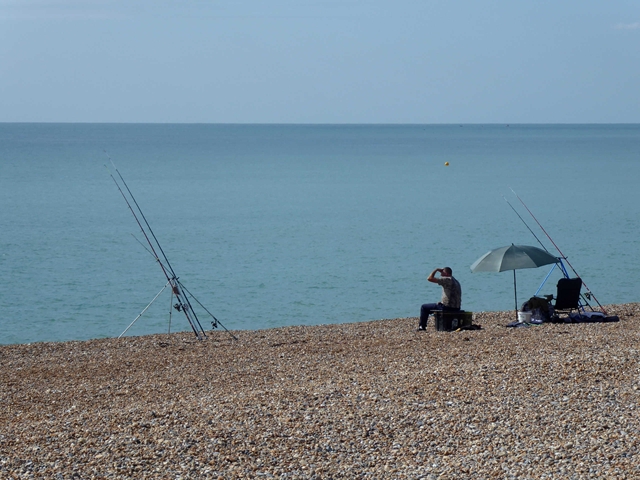
This is no longer a commercial fishery in any meaningful sense. The Newhaven and Seaford Shore Angling Club draws hundreds of rod-and-line fishermen to the same beach each year, and most of the catch on Seaford shingle now comes off the end of an angler's line rather than out of a net. But the winch and the wooden hulls are a direct, unbroken link to the men who, seven hundred years ago, sailed from this same beach to Norfolk every autumn, and who, in pursuit of the herring, accidentally founded a town.
Where to Watch a Boat Come In
- Splash Point, at the eastern end of the promenade, is the working end of the modern beach. Boats are usually winched up onto the shingle near the slipway.
- Seaford Museum, in Martello Tower No. 74, has a maritime gallery covering the Cinque Port era, the herring trade, and the silting of the harbour.
- The promenade between Splash Point and the Buckle, walked east-to-west, follows almost the exact line of the medieval shingle bar that eventually buried Seaford's harbour.
Sources: Seaford Museum & Heritage Society, History of Seaford (seafordmuseum.co.uk); Seaford Town Council, History of the Town (seafordtowncouncil.gov.uk); Seaford, East Sussex, Wikipedia (en.wikipedia.org); Cinque Ports, Wikipedia (en.wikipedia.org); The Cinque Ports and Great Yarmouth Bailiffs' Report, 1588, Kent Archaeological Society (kentarchaeology.org.uk)